This home, this barn and everything else you see on this property once served a unique purpose. Operating as a fully functioning “demonstration farm”, near Vulcan Alberta, and tied to the Canadian Pacific Railway, it was a show piece from over a century ago promoting the region’s agricultural potential.
Come, see how to work the land and then move here. Know what it takes to be a successful homesteader and we’ll show you how to do it. Right here and right now! There’s help get you started, my friends and a new life calls.
Prospective farmers were shown where to acquire a property and of course similar buildings, what crops to grow, what equipment to purchase, what techniques to use and so on. There’s an emphasis on how to do it efficiently and for maximum profit. It was simple and almost turnkey. Plop down some buildings on the land you just bought, apply what you’ve learned here and you’re in business.
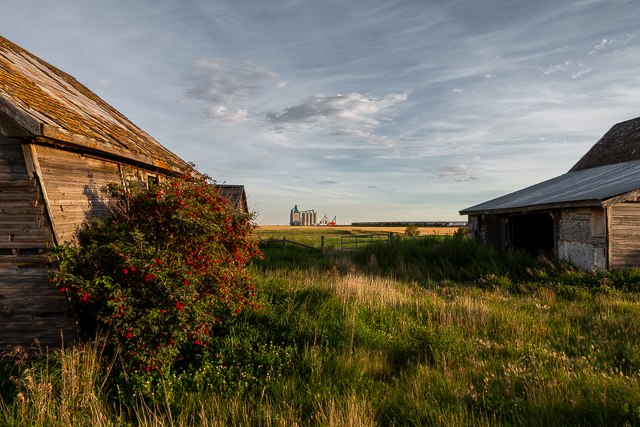
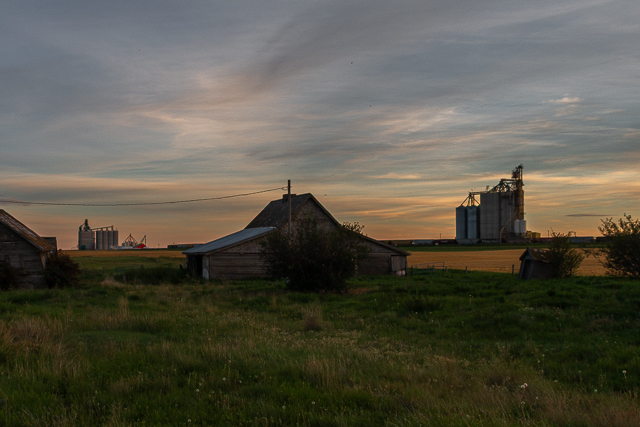
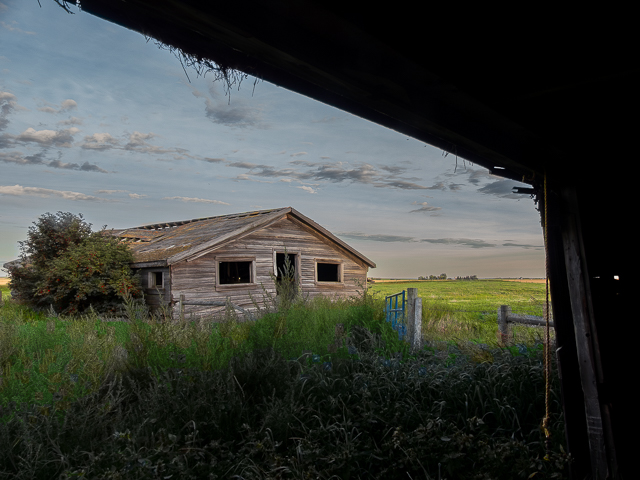
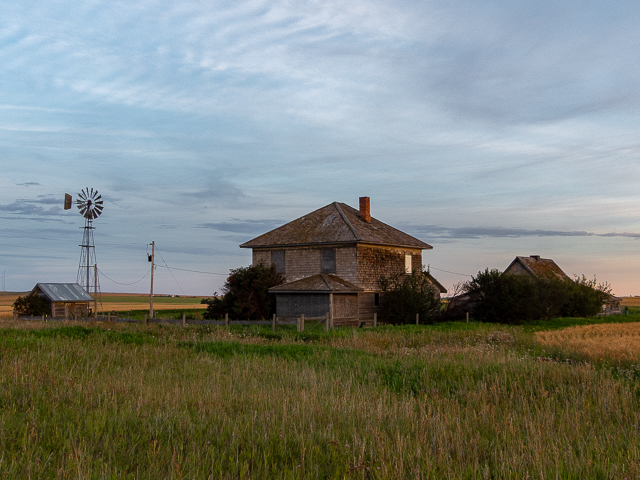
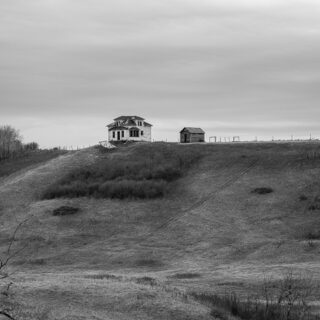
CPR Demonstration Farm Vulcan Alberta: empty and forgotten, but once a showpiece enticing settlers to the area (shot 2016). Dollar Store history with Chris Doering & Connie Biggart (BIGDoer/Synd)
Thanks to “Dale” for sponsoring this and many other posts at BIGDoer.com. Be like Dale…
Before we proceed further, a little note and it won’t take long. This is an old post from close to a decade ago and it’s been brought back for your enjoyment, with a little reworking or the copy, but the original photos. Now you know and it’s on with the show…
Welcome to the CPR Demonstration Farm – visited with permission.
The CPR had a vested interest in the demonstration farm and the success of this endeavour. They’d profit on the sale of these kit farms and then again, many-fold, on the resultant business brought to the railway by folks moving to the area. They’d ship inbound materials needed by all those new settlers and outbound agricultural products they would produce.
Scroll down for photos and to comment.
Then there’s the transporting of other people in and out, all the stuff needed for new towns that would spring up, and any industries established. Most everything moved by railway and it was win-win for the CPR.
This demonstration farm was one of many set up across the prairies by the railway and in the early part of the twentieth century. This one’s from 1912 and each, it appears, was unique in form. They were built in areas just opened up for general settlement and often concurrent with the coming of a new railway line.
These would used for a number of years, or even decades. When the population potential of the area was reached, or their usefulness fully exploited, they’d be disposed of piecemeal or sold off in some way. Over time the buildings connected to these places have mostly disappeared, but not here though. At one time there were thirteen – six in Alberta, three in Manitoba and four in Saskatchewan.
This example is located just outside the community of Vulcan Alberta and it’s believed the only one left that’s intact and complete where built. That it differs little from day one makes this site special and historically significant. Absolutely, we’re looking at something rare. All these buildings are on private property, so please respect that, but you can still easily view them from a nearby road.
It’s not entirely clear how long the Canadian Pacific Railway operated the farm. Some records suggest up until the late 1910s and others well into the late 1920s. What we found seems rather contradictory, but this is not an odd situation when compiling history. Sometimes it’s all over the map and confusing.
This farm, incidentally, was actually planned for another town and a place called Keoma Alberta. That town’s a bit northeast of Calgary and for reasons unknown, they later changed it to Vulcan (SE of Calgary).
We do know a bit about the farm’s first manager and this person lasted from opening until about 1915, but there’s nothing of those that followed. After disposal or sale by the CPR, whatever the year, the farm clearly remained occupied at least into the 1960s. Perhaps a wee bit later too, but into the 1970s the house stood empty. The barn and outbuildings seem to have seen use, in some capacity, for a time after.
There’s some gaps here as you can see and it’s a frustrating aspect of writing pieces like this. It’s compounded when done on a shoestring budget and with minimal resources. We hate to admit that we begrudging accept that some questions may lack answers for as time (or forever) and leave it at that.
The house and barn, and perhaps the other outbuildings, were made to standardized plans offered by the railway. These were off-the-shelf kits for easy assembly on one’s own property or sometimes they came pre-built and bundled with a parcel of land.
Several different models, sizes and layouts of houses and barns were offered, depending on the needs and budget.
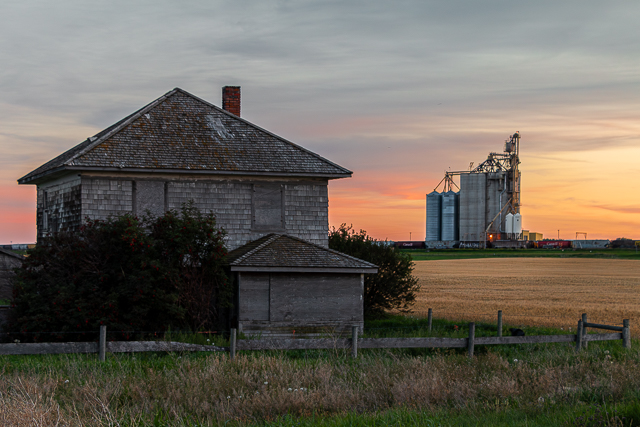
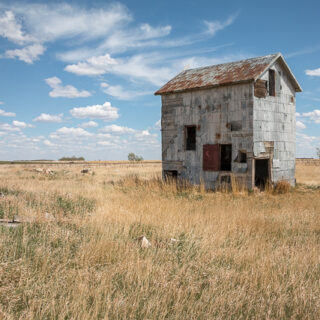
The house is fairly simple four square design, with two stories but few ornate elements. Even though plain and utilitarian, it’s charming in its own way. There’s room inside for a good sized family and back then having many kids was the norm. It looks like a coal stove originally provided heat and post World War Two the then owners brought electricity to the property.
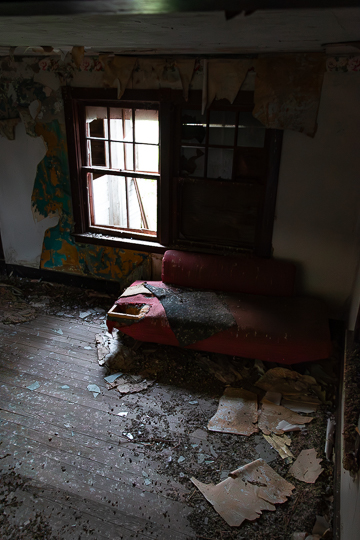
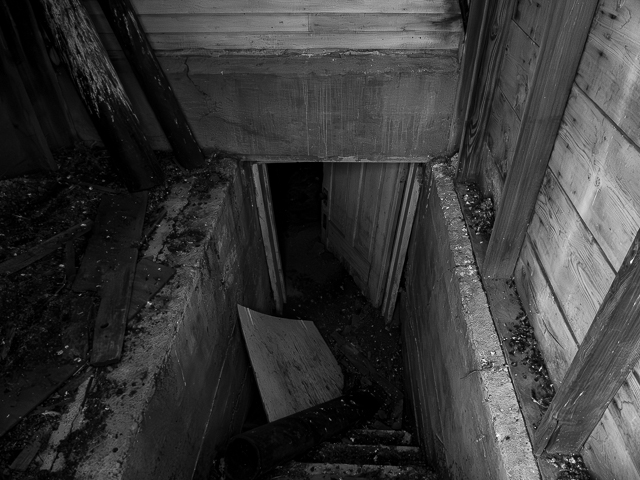
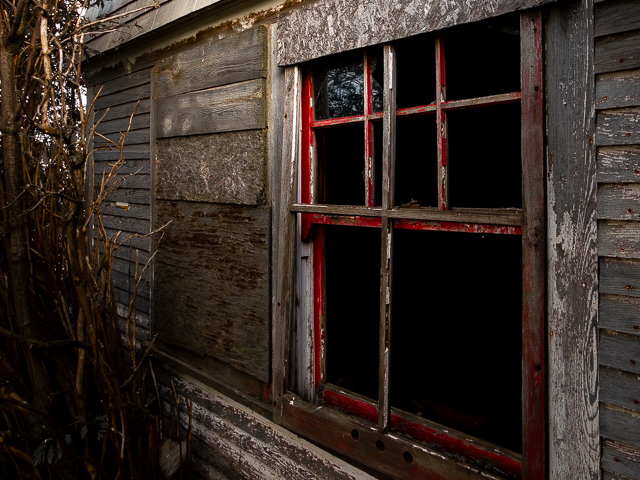
Other than one piece of furniture, odd bits of junk and bird poop underfoot, the house is empty. Peeling layers of paint and wallpaper in places exposes a plethora of colours from earlier times. A peek into the the basement showed much mud down there and we didn’t venture inside. It didn’t look like there was much to see anyway.
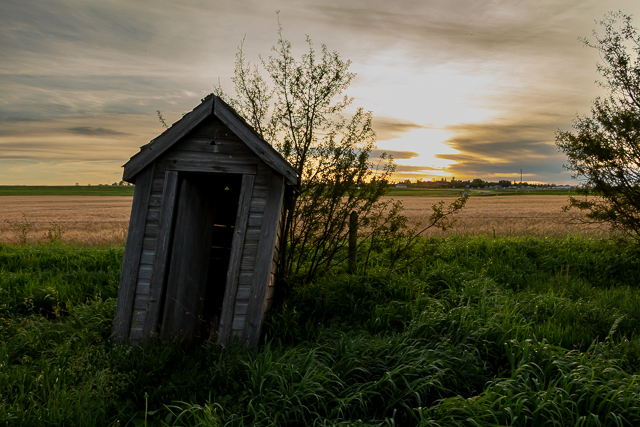
Plumbing? Well, the biffy’s outside. Picture having to do one’s business some cold January morning and shudder at the thought.
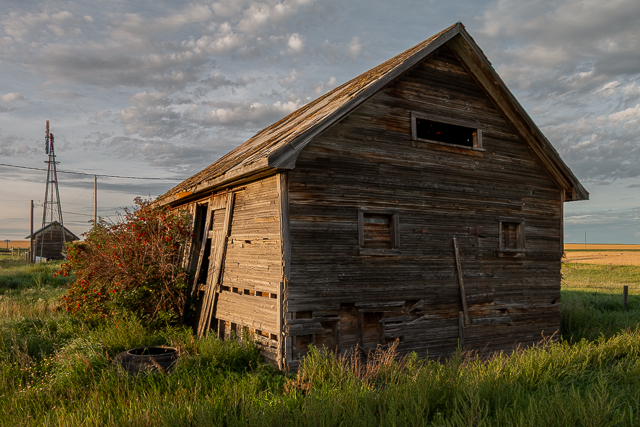
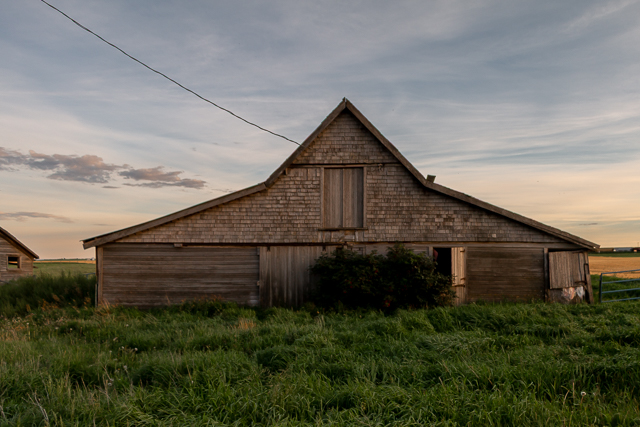
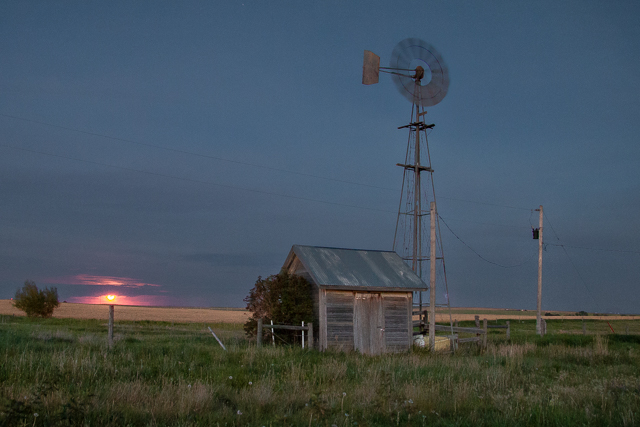
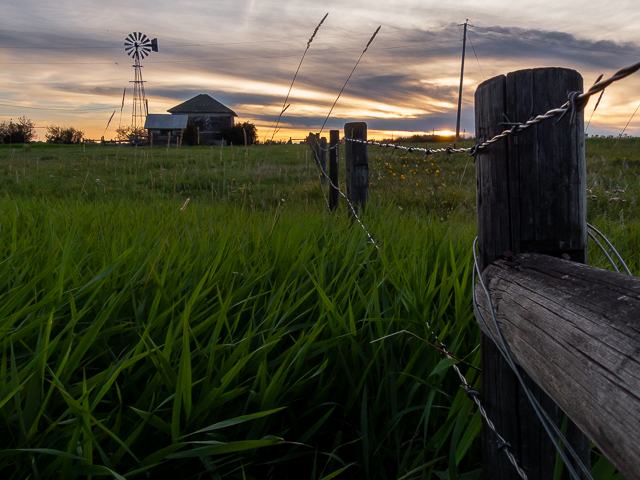
The barn is unremarkable, but functional. Ones like it lacking the traditional gambrel type barn roof, never seem as iconic as though with. The wind driven water pump looks complete and the wheel still spins up on the breeze.
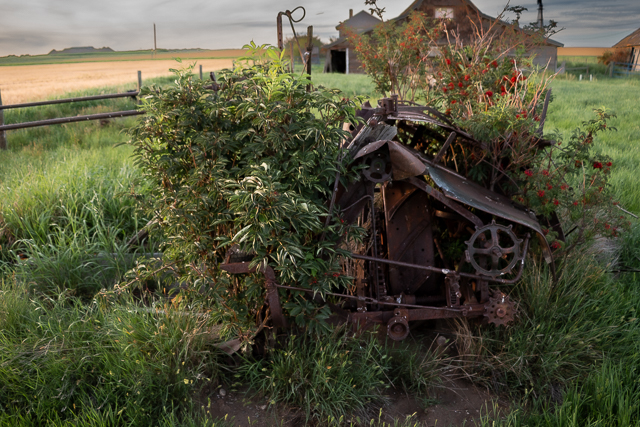
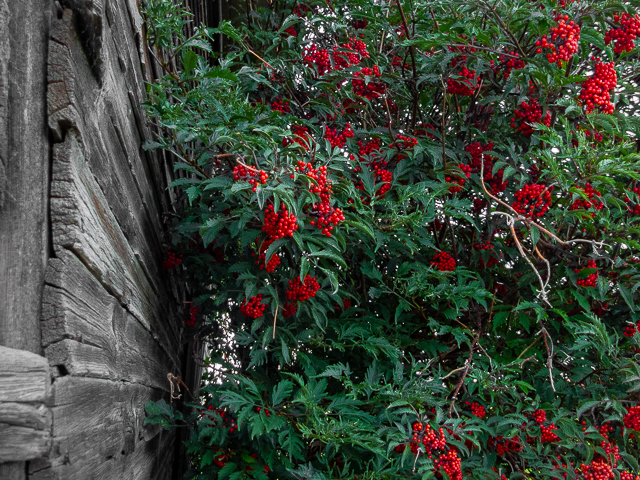
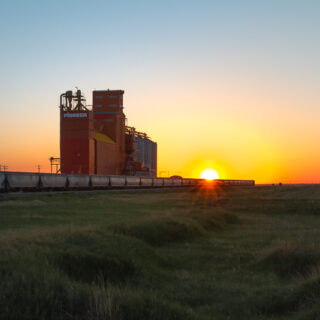
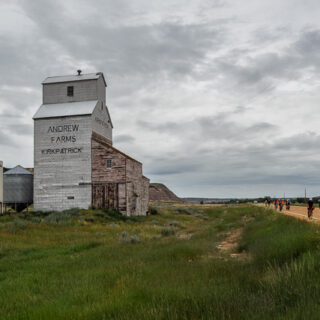
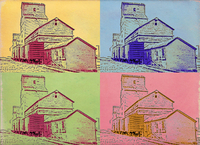
There’s odd bits of machinery scattered about the property and shrubs of red elderberry seem to thrive on the property. Two of Vulcan’s concrete grain terminals are a backdrop to this shoot and mark the Canadian Pacific Kansas City’s (as they are called today) railway line.
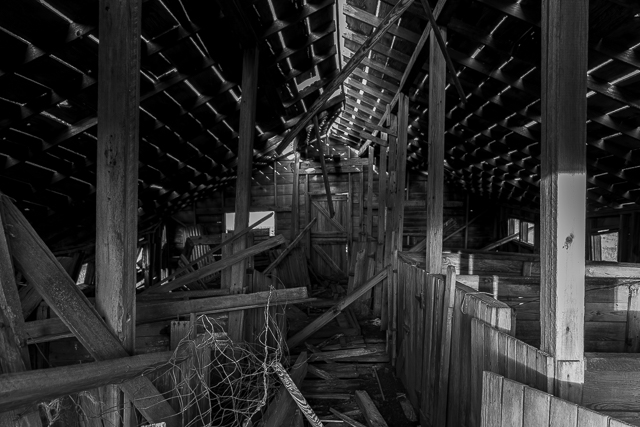
While boarded up, birds and the elements have gotten inside and made a mess of the house. It looks and feels structurally sound, however. The barn still seems somewhat solid and true, but less so than the dwelling. Two additional outbuildings, possibly added post CPR ownership, are not doing as well. They’ll fall down one day and probably sooner than the rest.
In more recent times, a group has explored the possibility of taking over stewardship of the demonstration farm and have it officially recognized as an historic resource. There appears to no movement on this since we posted this piece almost ten years ago. It has an important connection to the province’s rural roots and its settlement history.
One can’t help wonder how many people came to the Vulcan area and went on to be farmers because of this place? It surely had an impact on the region’s success and that’s pretty interesting. In spite of a lengthy and exhaustive search, we’ve found no photos of the farm in its heyday. It’s a prairie farm archetype and surely someone must have taken a few shots of it at some point.
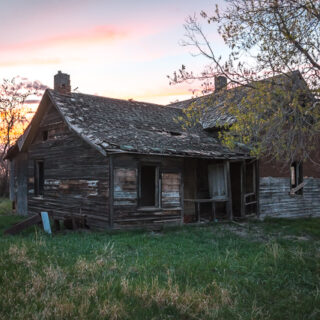
An outbuilding in the softening light of evening.
If and when the demonstration farm is acquired by whomever, they’ll have their work cut out for them. The roof needs attention for one and there’s a million other things too. Bird poop, rotten timbers, and other issues will need addressing. Still, it appears it’s not beyond saving and likely with a bit of elbow grease could return to its former glory. This piece dates to 2016, but we pass by often and from a distance the house and barn look about the same today. One shed seems to be collapsing though.
They’ll need money and lots of it. As someone working to help save old buildings, we’ve seen firsthand and it’s not cheap to do. Given what it all represents, it mostly definitely deserves to be saved and we doubt anyone would argue that.
“Chris and Connie have a unique way of documenting the places they visit, not copying the style or technique of others, but making it their own.” Alex Craig, Filmmaker.
Something to say and no one to say it to? Go here: Contact Us!
Date: August, 2016. Location: Vulcan, Alberta. Article references and thanks: Bev, Todd, Book – Wheat Country, a History of Vulcan and District, Vulcan County Heritage Survey, Vulcan Advocate and miscellaneous Canadian Pacific Railway records. The CPR Demonstration Farm is private property and BIGDoer.com visited with permission.
_________________________
BIGDoer.com: Historic Connections & Comparisons – Curious History – Adventure – The Beer Parlour Project 🍺

Comments are (OFF)