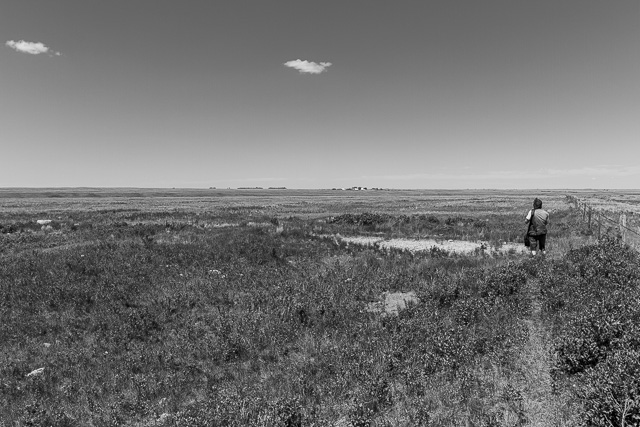
A BIGDoer.com Classic from 2019. There are ghost towns and then there’s Carolside Alberta. It’s a community so totally gone, that it’s as though it never existed. While there’s odd little bits underfoot to hint of what was, if one looks real close, there’s not a single structure left standing today, nor much else.
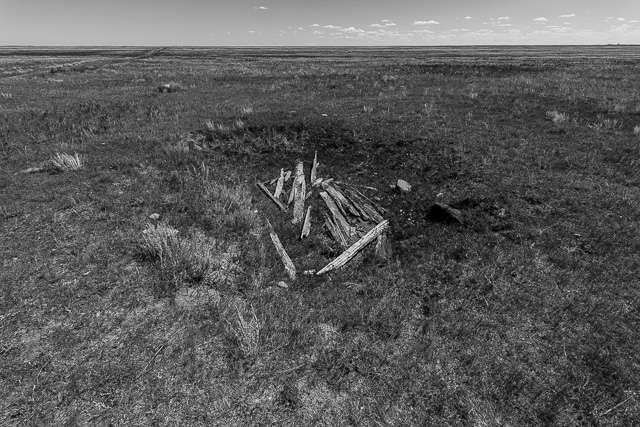
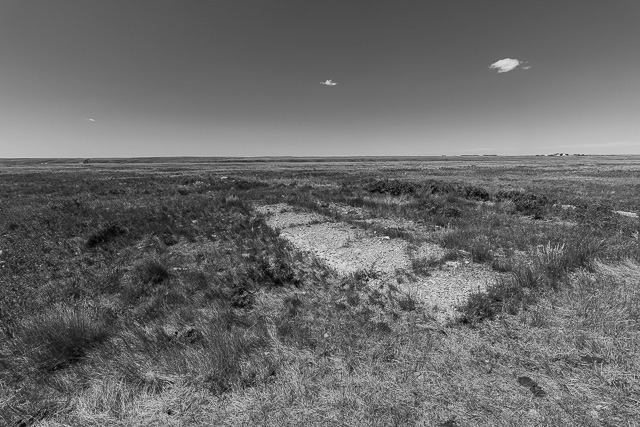
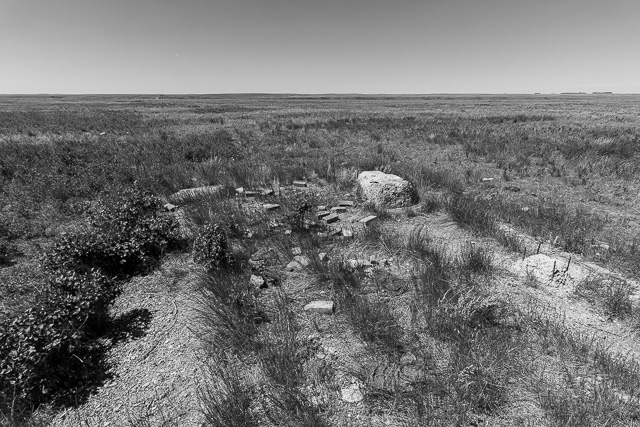
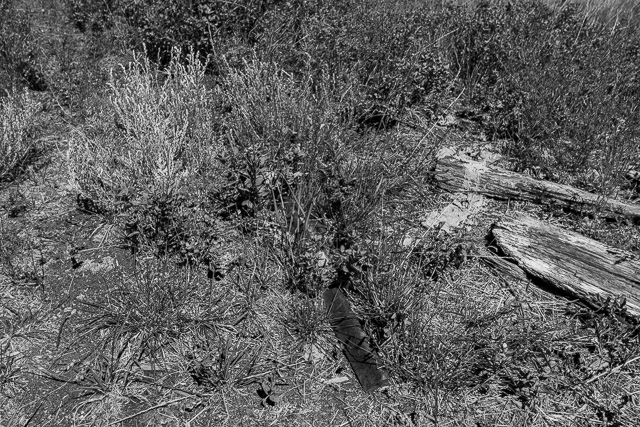
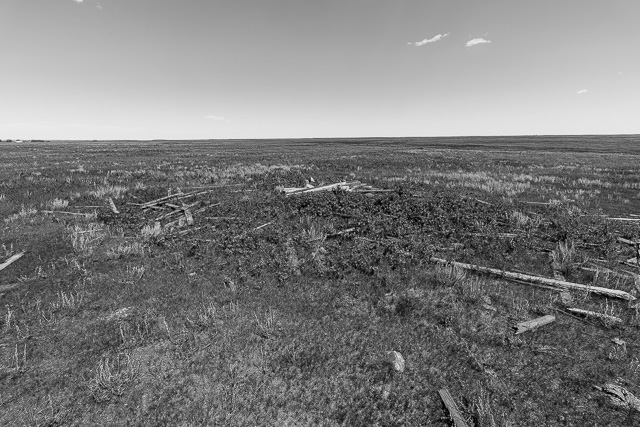
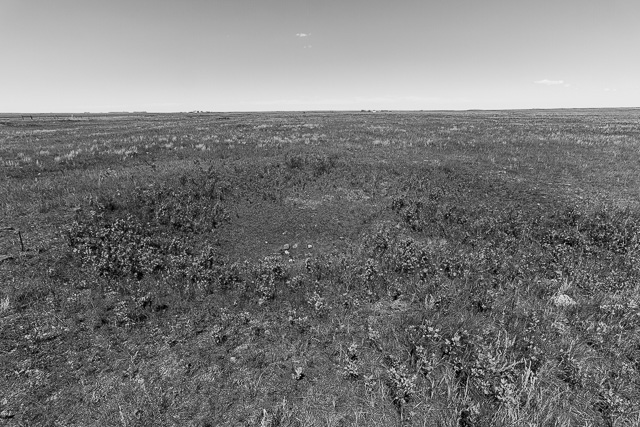
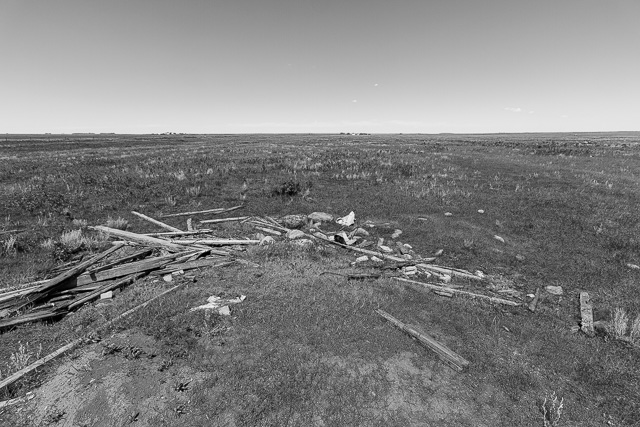
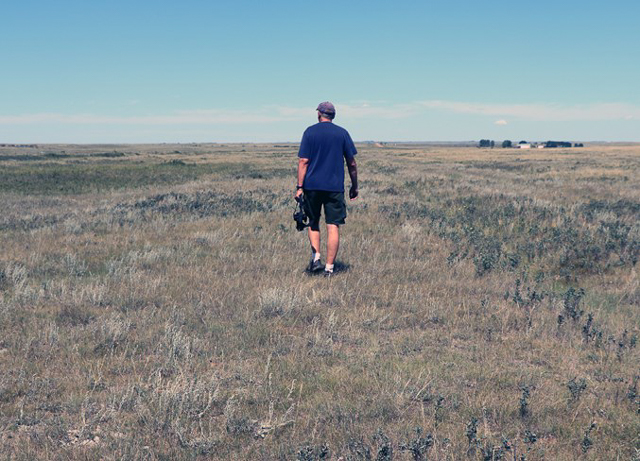
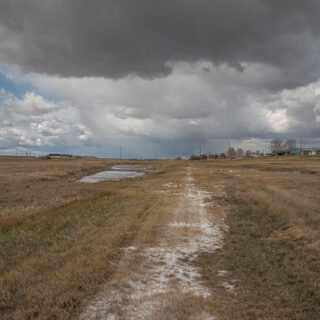
Over there in the grass, there’s a depression marking the location of something (a home?) and over this way a concrete pad that belonged to a grain elevator. A small berm, the long abandoned railway line, splits the town, but blink and you’ll miss it. Ahead are odd bits of wood and outlines of what we think is a street. Hard to tell, and that’s it my friends. It’s gone…the town is totally gone.
This is Carolside Alberta. On the ground with Chris Doering & Connie Biggart (BIGDoer/Synd/Canada.com)
Thanks to “Anonymous” for sponsoring this and many other posts at BIGDoer.com. Be an angel…
While Carolside is no more, there’s still something interesting here. It was a community once, holding much promise, that today defines “forgotten”. For most ghost towns something remains, a building, a street sign, a sidewalk, but here, you’re left to your imagination and an eagle eye to uncover its secrets. There’s no Instagram moments to be had standing on the property, just silence and a feeling remote and lonely.
Scroll down for photos and to comment.
Walk about, look down and a wee story pieces itself together, incomplete and with big gaping holes. Some parts are only guessed at. Still, it’s something. This way was the elevator and that must have been the location of a store. Maybe, if Carolside even had a store. And here it’s likely where a home or two stood.
Main and Railway is “downtown” and a block over on 1st Avenue is out in the burbs. Surprisingly mapping program show these long grown over streets as though they were still there.
This town, as the case with many prairie communities, owes it existence to the railway. The line through dates to about 1920-ish and was a branch heading south from a point near Hanna to the Red Deer River at a community called Stevesville.
This stretch (commonly called the Peavine Line) belonged to Canadian Northern Railways. Plans were to have it reach Medicine Hat, but they never made it beyond the river, even if they graded it the whole way. Soon after completion, it became a Canadian National Railways property, after a merger involving the Canadian Northern and some competitors.
Major commodities moved on this line included grain, coal and petroleum products. The last train along this section was in the late 1970s, but it didn’t matter for little dot-on-the-map Carolside. By then it was gone.
The town thrived, modestly, in the early days. It appears there was a couple homes and a store or two perhaps. The local history book is rather mute on the subject, but old newspaper accounts speak of ambitious plans. This included many potential businesses, but it may have been a little pie-in-the-sky. To what extent the town actually developed is a bit unclear. By our guess, we can see at least a half dozen depressions potentially marking the location of something.
There was a post office confirmed, however and also two grain elevators. Trains came now and then to connect Carolside to the outside world.
In very short order, the town seems to have shrivelled and died. By the 1950s, it appears only one grain elevator remained and soon after even it was gone. Even in demise, the trains still passed for a time, but now there was no reason to stop. Present day, we bet no one the highway over there even knows it was here.
Carolside came and went in the blink of a eye. While many of the other towns along this same railway line fared better, most are flirting with ghost town status today. It’s a tough area to farm, with many dry years and much hardship. Still, there’s remains of these other burgs left standing, unlike Carolside where there’s nada.
We stand there as we often do, in an empty field, and think about those who called Carolside home, or maybe lived nearby or delivered to the elevators. It’s a period movie in our heads. We kick aside a plank and find some broken pottery. We stand on a grain elevator foundation recalling a time when it was the very lifeblood for local farmers. It’s here after all, after much toil and sweat, where one’s paycheque came.
With the closing of the elevators, farmers drove to the next town closest, Sunnynook in the north or Pollockville in the south. Later those elevators closed too, so producers had go even further afield.
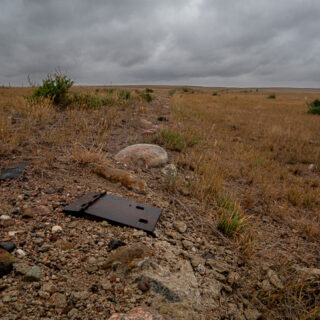
By the train tracks there’s a few old spikes, long buried, splinters of wood and what appears to be a tie-bar for connecting two rails. There’s few things remaining of the Peavine Line. Some raised earth by the tracks suggests the location of the train station. It would have been pretty small and an unmanned flag stop, we presume. Again, the area history book hasn’t anything to say about it.
Trains came a couple times a week and for a time it appears there was also a dedicated passenger service. Late accommodations for travellers were a coach tacked on the end of a slow moving local freights. For the last couples decades only freights roamed the line, and they were sporadic at that.
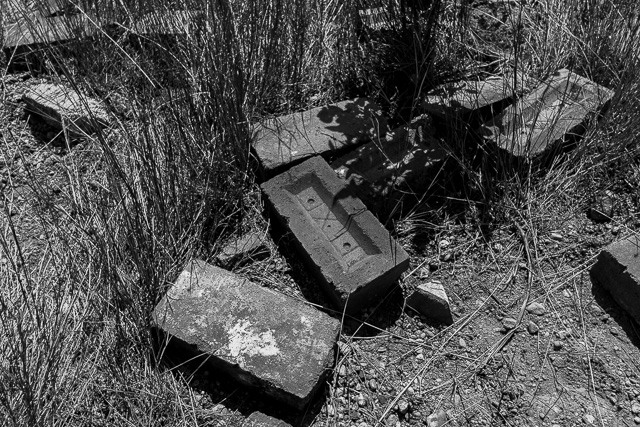
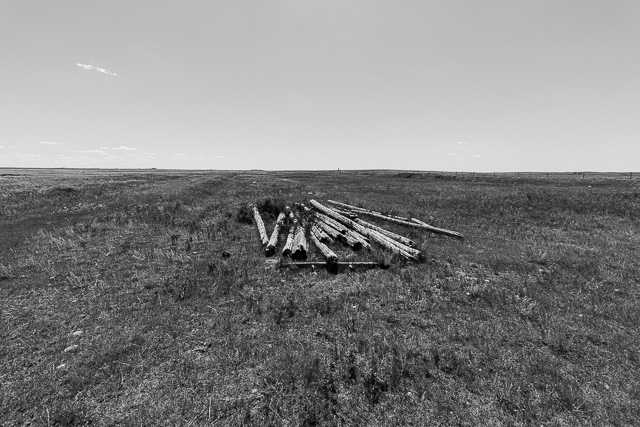
Some old line poles have been sitting out in the sun a loooong time and are cracked and bleached. They’d probably turn to dust if disturbed. There’s the odd brick, some glass shards and bits of metal underfoot.
The more we walk about, the more we can make out the streets and visibly they’re a little more packed down than the ground in between. Confirming in person what Google Maps shows, the town was two whole blocks square (well, actually rectangle). Main, Railway, 1st St S, 1st St N and 1st Ave. Carolside: a few streets and two blocks. A stone’s throw will get you from one end to the other.
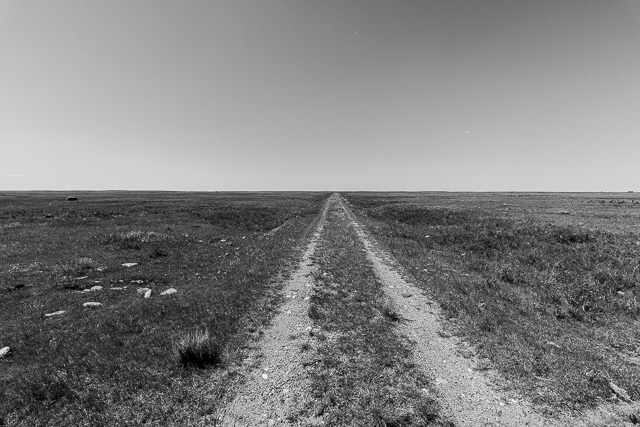
Randomly point yourself in a direction of the compass and look across endless pasture. Save for one angle, where off in the distance down the “road in” (more a cart track), the highway is seen, that’s all there is. Well that, plus some tall power lines over that way. You’re looking at all the signs of human activity.
Carolside is remote and always has been. So many lost memories and we only scratched the surface. The town is on private property and not publicly accessible.
Hosting us this day is a legend that needs little introduction (just don’t give him a hammer), Johnnie Bachusky. He’s the reigning Godfather of ghost-towning and deserving of the title. As we recall, Carolside was new to him. But then again, it flies under everyone’s radar, so it’s new to most.
We’re those strange types who can appreciate a literal nothingness, but we don’t think many others get the vibe. Well, Mr Bachusky does…yes, so I guess we’re a trio of weird misfits.
Johnnie agrees, Carolside is a sombre spot, but later this day we all visited what he’s often described as “the saddest place on earth”. We’re talking of Alderson, an hour to the south, that came and went in a generation or two and which similarly almost nothing remains. It grew to be bigger than Carolside, but it too vanished completely. Perhaps we’ll repost that adventure sometime down the road.
We say our goodbyes to former town and we’re off on the next adventure. We mostly saw grass and pasture, but still it got our minds to thinking about those who came before. Let’s give a cheer for their spirit and resolve, but we know not their names.
Carolside gets it name from an early settler, after their ancestral home in Scotland. We’ve yet to see a photo of the town in any archives we’re allowed into (and that’s a lot), but we have found brief mentions in various old newspapers. Nothing much really – so and so visited family in Hanna – that sort of breaking-news fluff. But there’s little that speaks of the town itself – what was there and for how long? That information is lacking and we doubt we’ll ever know more.
This visit was on what was perhaps the hottest day of the year. Or so it felt. The sun beat down relentlessly from a near cloudless sky and without shade, it was brutal.
This article is from the archives (it holds over a 1000 posts) and it got a rewrite in the process. Stay tuned for more like this, long forgotten posts from five years or more ago, that we’ll be republishing in the days to come. Hope you enjoy them.
They’re saying…
“Chris and Connie explore places most of us never have heard of, let alone seen! Outstanding pictures and stories and a generous spirit in sharing. I admire their determination to tell the whole story. I love the site!” Hans Schoendorfer.
If you wish more information on what you’ve seen here, by all means contact us!
Date of Adventure: July, 2019. Location: Special Areas #2, Alberta. Article references and thanks: Johnnie Bachusky, the land owner for allowing permission, plus the books: Roads to Rose Lynn, Place names of Alberta Volume II Southern Alberta & the late Jim Pearson’s Vanishing Sentinels Volume 1 (we miss the guy). Also Hanna Herald archives at the University of Lethbridge (various years).
_________________________
BIGDoer.com: Historic Connections & Comparisons – Curious History – Adventure – The Beer Parlour Project 🍺
Comments are (OFF)