Camera Crazy @ Pioneer Acres Museum
We went a little camera crazy at Pioneer Acres Museum in Irricana Alberta during 2020 and 2021. It started during the deep, dark depths of the Covid Pandemic and it took a year, plus a lot of work to complete the resultant display. The museum acquired a literal van load of vintage camera gear via a donation, and with some spare time on our hands during the lockdown, we volunteered to help make something of it.
We love doing this sort of thing, even if time and resources imposes certain limits on us.
They asked for a general assessment and if there’s potential to make a display of the gear for the main hall. We’re enthusiasts in the field, so this proved to be pretty easy. And it was not monotonous as you might think, but still a great deal of work. Opening each box was sort of a fun Christmasy affair and the time rushed past. Open, examine, catalogue the interesting stuff, set aside the rest. The answer came quickly and it was yes, it can be done.
Camera Crazy @ Pioneer Acres Museum – not just a display, but an adventure! Volunteering with Chris Doering & Connie Biggart (BIGDoer/Synd)
Be like Byron…
As work proceeded it soon became clear that we could do more and up the fun quotient in the process. Many of the cameras worked – there’s film too, albeit expired, but still usable – so, let’s make a party of it! Don’t just display the gear, but put cameras to use. Make it happen and more.
I know what to do…a photo tour of Pioneer Acres, using cameras pulled from the display, old film found in the donation (along with some new film to help round out the supply) and then let’s compile them into a photo-book. Make it part of the exhibit and make it different. You don’t just see the cameras, but what they captured. This gear shot these photos!
It was a big task, so we called on a few friends to help, wandered the closed museum grounds over several days and shot hundreds of frames. Some cameras failed part way in and most of the film was too far gone to make decent images. Over all, however, we captured some amazing stuff and it’s all there for you to see.
The collection comprised cameras from the early 1900s to the 1980s. It also included much film (expired stock from the 1960s-1980s), flash bulbs and accessories. Some cameras were new in box, others were well used, some badly broken and in pieces, and everything in between.
Most was consumer level gear – so cheap stuff, but with a few enthusiast cameras in the mix. Think everyday cameras for everyday people and everyday use. Nothing serious but from a today perspective, they’re awesome.
We tested the ones selected for the shoot and set them aside if they passed. The really old gear was often non-functional in some way, and/or used film in a format not available. Can’t use those. In the end, most of the images came of cameras from the 1940s-1970s period, and with a lot of mid-century gear especially. People were really into photography in the 1950s, it seems.
So the gear seems to work, but will they work well enough? Time will tell. Would the old film even take an image? Time will tell. No matter and let’s jump in and just do it! If we get good shots, great, but if they’re laughable, it’s not so bad. What will happen? We don’t know! If none of them work, we’ve had a good time, but as it turned out, we got a little bit of everything. Photos ranged from inspired to dreadful.
Some cameras packed it in mid-shoot, others were clearly not within spec and this made for interesting photos, and the old film also produced some seriously wonky results.
Presenting a behind the scenes random sampling of images, highlighting the creation of a photography equipment display at Pioneer Acres Museum…let’s go!
1) Vivitar 700 110 format snapshot camera and it came with the retail box, but not all the pieces were inside. These flat style cameras were compact and easily fit inside a shirt pocket. This one is from the 1970s and that’s a period when 110 film was most popular. The small frame size and the general low-cost construction of this style of camera (although this one is better than most) made for generally mediocre images. While not used in the film segment, it was included in the display.
2) Kodak Colorburst 250 instant camera. This was Kodak’s answer to the popular Polaroid line but never sold as well. Still the firm offered various models from the mid-1970s to mid-1980s and only shut down production after losing a messy court battle with its rival due to some patent infringement issues. This one is from about 1980 and the functionality is not know. They don’t make film for it, nor have they for a long time. Included in the display.
3) Open a box (and there were many), examine the contents and short list the good stuff. Rinse and repeat. It sounds like a dreadfully dull task, but perhaps we’re a bit odd, and we found it delightful.
4) Ricoh “35” 35mm. It’s from the 1950s, made in Japan and is an enthusiast’s camera. A “rangefinder” rig like this allows one to accurately measure the subject to camera to distance in the viewfinder, assuring images in crisp focus. A protective leather case is must for gear this calibre. It worked and we used it.
5) Just a small sampling of the donated collection. It all came from a camera collector and gifted by his estate on his passing.
6) An old five dollar bill rolled up inside one camera. We thought perhaps more might contain money, and had dreams of riches, but this was it.
7) Building the display and in the end we used two cases worth. In addition to the cameras themselves, there’s a binder with a short description of each, some old promotional flyers and a separate photo album, which we spoke of earlier.
8) Old film pulled from the collection and supplemented with new stock. The oldest roll in the donated boxes was from the 1960s and the newest from the 1980s. We have no idea how they were kept. While a cool and dry place is ideal, we have to assume that likely didn’t happen. All the old film worked though, even if the results were sometimes strange. Formats included 110 cartridge, 120 roll, 126 cartridge, 127 roll, 135 (35mm) spool, and 620 roll.
The cost of processing the images was paid via a donation to the museum from a kind benefactor.
9 and 10) Walter Voss Diax Model 1 35mm and the resultant image it just captured. This rangefinder camera comes from an obscure German maker in the 1950s and is a work of art in every way. It also suffers from being quirky in function, but given the beauty of the design, one can forgive this transgression. It became a favourite among everyone shooting the old film images and some appear in that photo binder at Pioneer Acres. Look for that binder!
11) Lipca Flexo and it takes both 620 and 120 roll film. It’s a rare camera from an obscure German maker (circa 1950). It’s a true Twin Lens Reflex camera, so full featured and with coupled viewing/taking lenses, It’s very solid and quite capable. Another camera elegant in design. The Lipca firm was not in business for long, lasting from the late 1940s to the early 1960s. 620 and 120 film only differs in the size of the spool flange but otherwise they’re the same.
12) Our friend and accomplished photographer Byron Robb inside the historic Long House at Pioneer Acres. He’s using the Diax Camera spoken of earlier and being one of the most capable and fun to use rigs in the mix, we all had to take a turn using it. The Long House is a highlight of the museum.
13) Bentley BX-3. Little is known of the maker or even the era in may have been from. The 1970s to 1980s period is good bet though. Meant to look the part of a more advanced camera, it’s a toy usually given away as promotions. The second rig is a Kodak Tourist made between 1948 and 1951. It’s more upscale than most Kodak cameras of the era, but this one didn’t function.
14) Snapping photos with a Kodak Brownie Starmeter. Made from the early to mid-1960s, this simple, affordable, plastic camera usually came with all the accessories one would need to get out shooting right away. This is the rig your Mom used when the family visited Niagara Falls in ’65. It worked fine and is also on display. Kodak used the Brownie name for many cameras in the years, from at least 1900 and into the 1980s. Brownie were typically simple, no fuss cameras.
15) Connie joined in on the fun too and we all fondly recall the experience.
16) A small (Sekonic brand) light meter used in determining the exposure for some of the cameras. It’s from the Pioneer Acres collection too and seemed to work fine – no batteries needed. We compared it to what the digital camera was reading and it always matched up exactly. To use it correctly took a bit of practice, but once understood, it was easy.
17 to 19) Polaroid expert David Clarke put his knowledge to work and dare we say, had a blast in the process. He also donated the specialized film needed and it’s hard to get. He coaxed some of instant cameras into working, but not all. Keep in mind, it’s probably been decades since they were used.
The resultant images are also on display in the film binder. David in the one photo is seen shooting a Polaroid 210 Folding Camera from the late 1960s. It was one in a long line of foldable instant (or near-instant) cameras offered by the firm.
20) Many of the simpler cameras used disposable flashes (cube or bars) and since the collection included a box of those, we used some. Here’s Byron mid-flash using a cheap 110 flat camera.
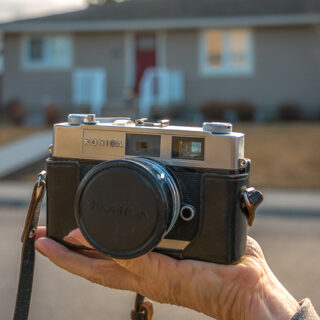
21 and 22) Just a small sampling of some of the photos that came of this shoot. They’re some nice ones in group and some not so good. In one photo, you can see the moment a camera tanked and the weird colour shifting from some of the older films produced. Some photos are actually quite decent and the next photo shows one of our favourites. We used the Konica S2 seen in frame 21 for that shot.
23) One of two showcases in the Pioneer Acres main hall and some of the cameras seen in this piece are visible. Can you spot any?
We captured hundreds of behind-the-scenes images showing us making the display and perhaps that’s a bit of overkill. These just a few of the many, and reflect the fun times had while spending time at Pioneer Acres. To see the rest of the film shots, we suggest stopping by and check them out with the exhibit. To take a break, we’d wander the museum and there’s lots of interesting stuff to see there – more pics below.
It’s been a year or so since we stopped by Pioneer Acres, but we’ll be back one day. The staff has changed and we’ve sort of lost touch.
Know more about the museum (new tab): Pioneer Acres Irricana Alberta.
They’re saying…
“Chris and Connie are the real deal – their adventures are truly interesting and fun!” Justine Cooke.
Random awesomeness…
Shaunavon Saskatchewan ~70 years apart.
Locomotives of 40 Mile Rail (Amazing Skies).
Calgary Transit #1046 Fantrip.
Linclon, or is that Ƨeventh?.
Something to say and no one to say it to? Go here: Contact Us!
Date of adventure: 2020-2021.
Location: Irricana, Alberta.
Article references and thanks: Shelly at Pioneer Acres Museum, Byron Robb, David Clarke, and Camera-Wiki.org.
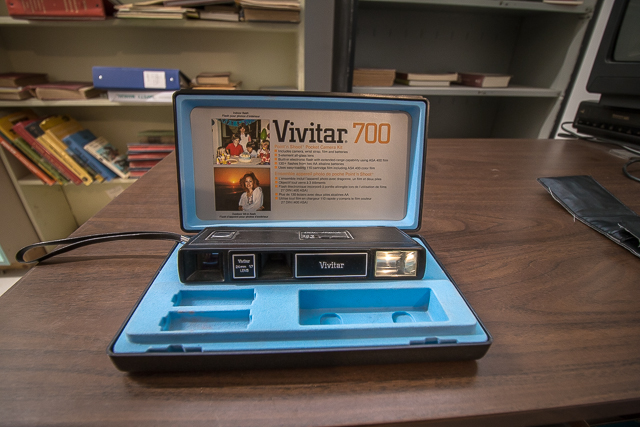
1) A Vivitar 700 (1970s) for 110 format snapshots.
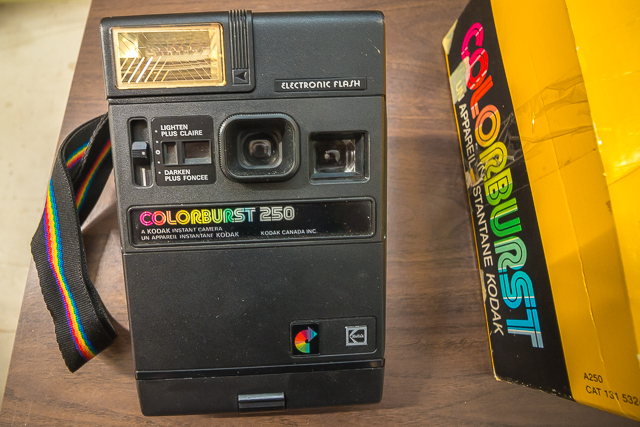
2) A Kodak instant camera – like the more famous Polaroid.
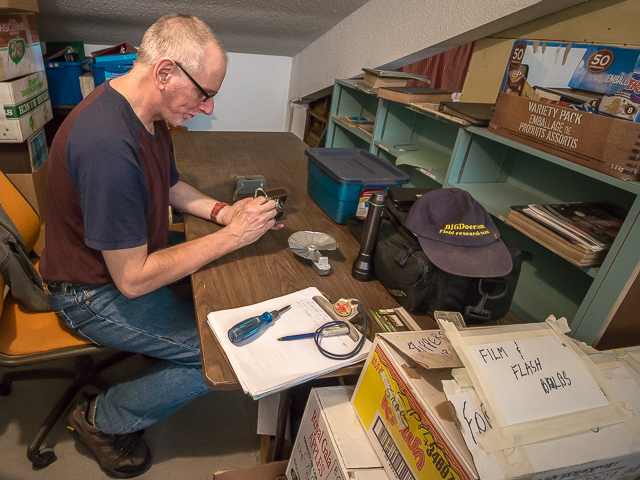
3) Going though the cameras, one by one, over many visits.
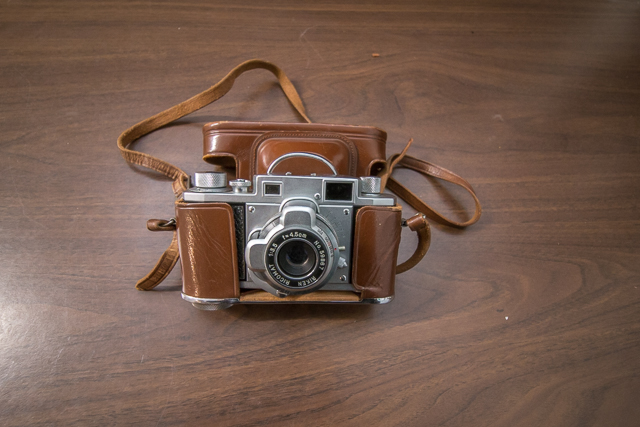
4) A Ricoh 35 Rangefinder from the 1950s.
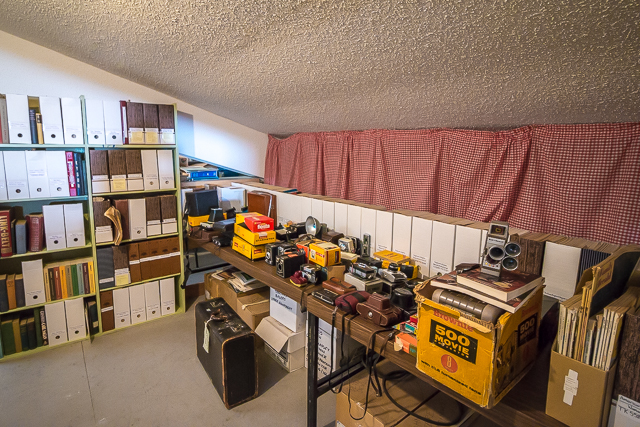
5) Just a small sampling of the gear inventoried.
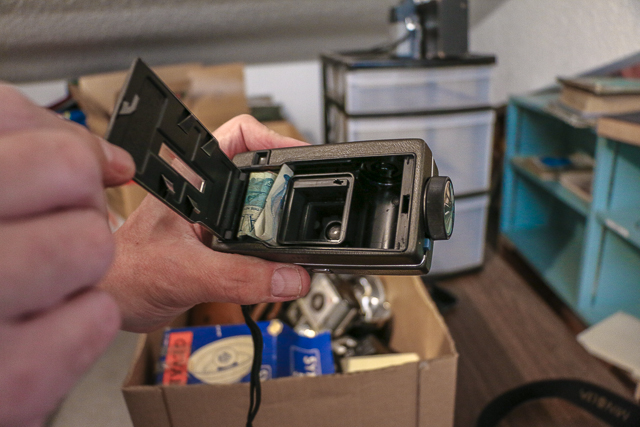
6) Five bucks!
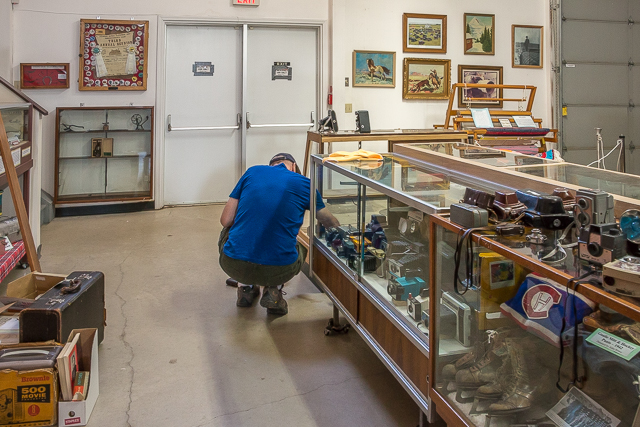
7) Building a display.
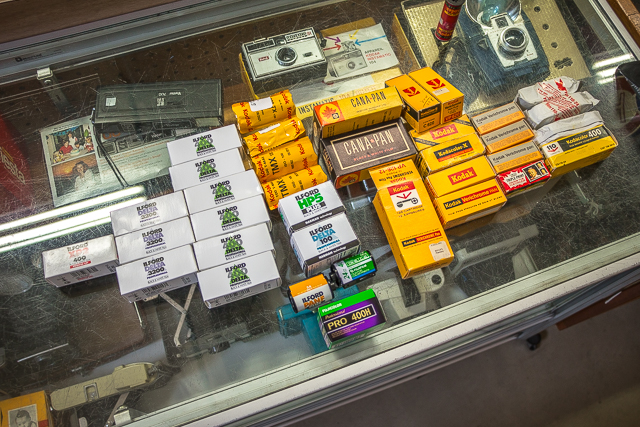
8) We used the cameras too, using new & old film stock.
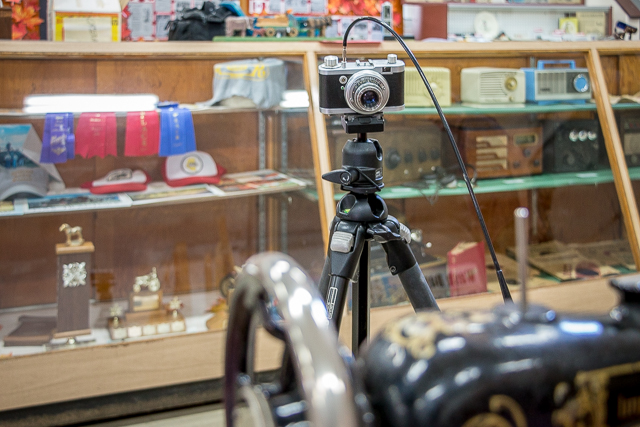
9) A Voss Diax (1950s), a work of art, but a bit quirky.
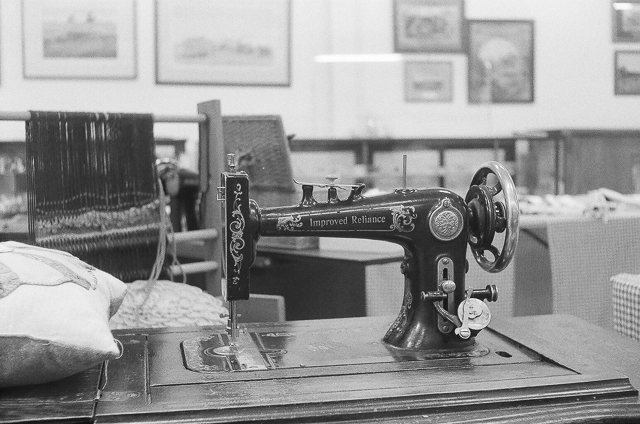
10) The resultant image…
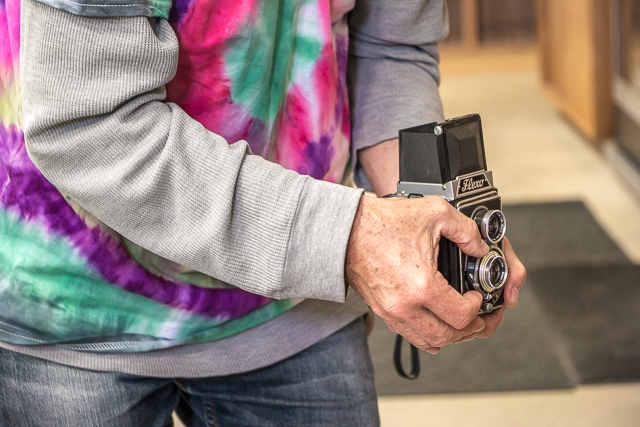
11) A Lipca Flexo (1950s) Twin Lens Reflex camera.
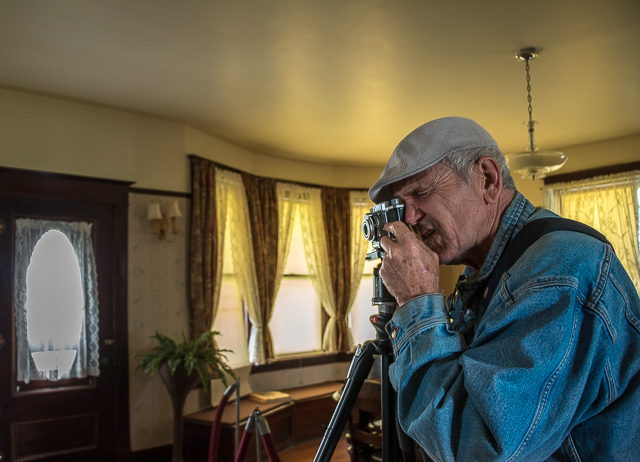
12) Joined by our friend Byron Robb.
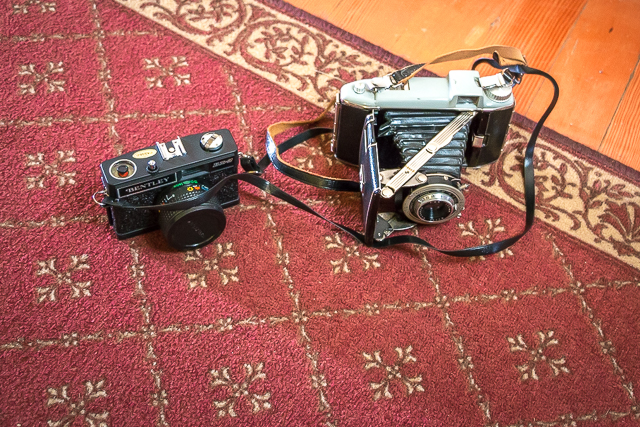
13) Pulled randomly…
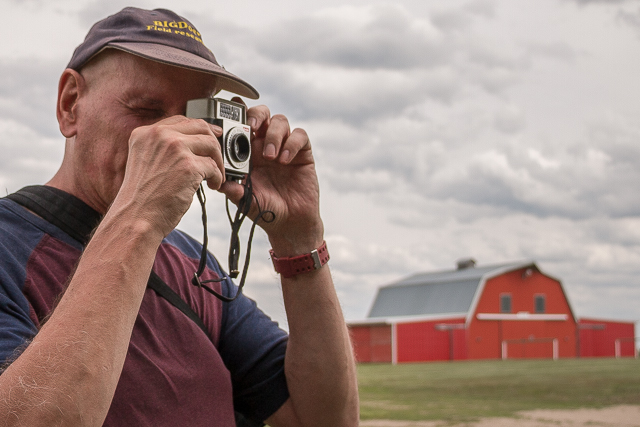
14) Out on the museum grounds and putting them to work.
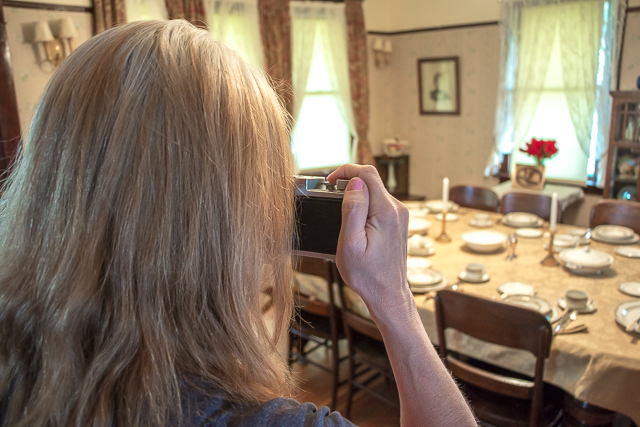
15) We all had a blast!
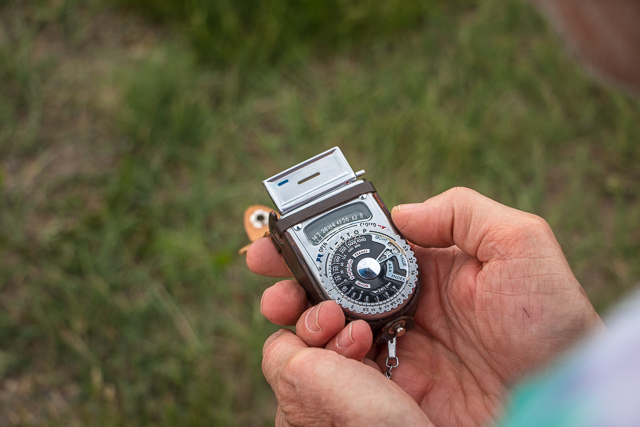
16) Taking a light meter reading.
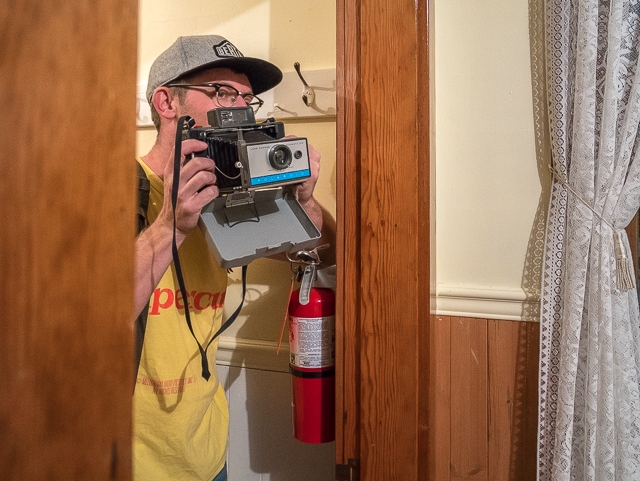
17) Polaroid expert David Clarke is on the scene.
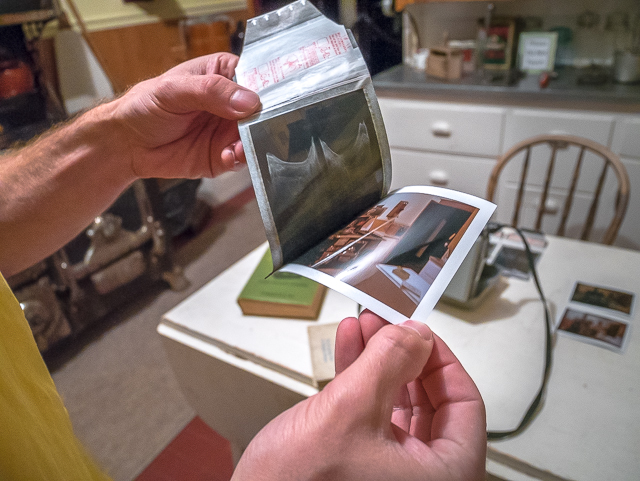
18) Success!
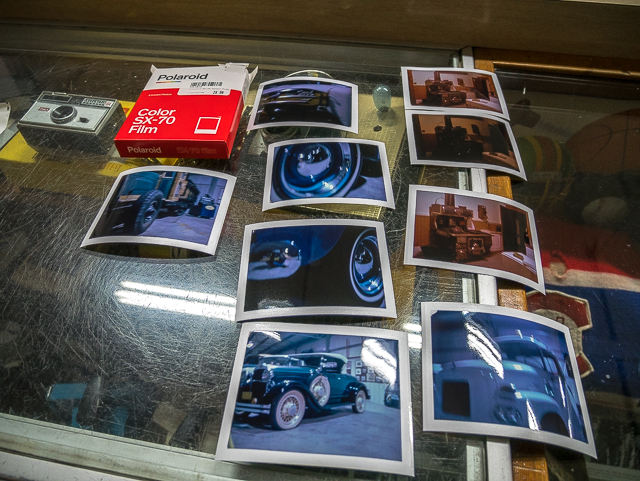
19) And more.
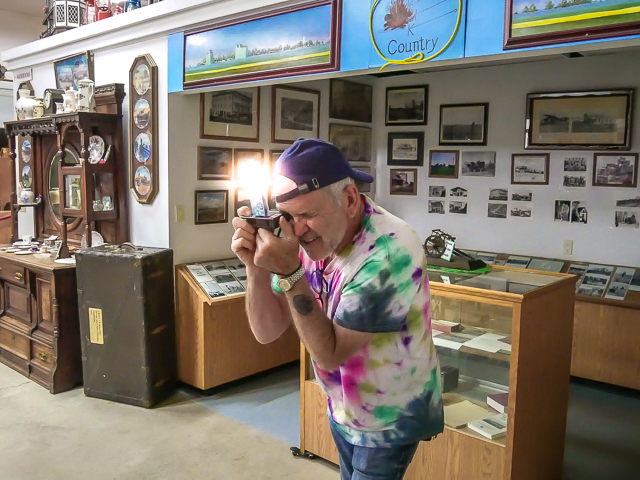
20) Captured mid-flash.
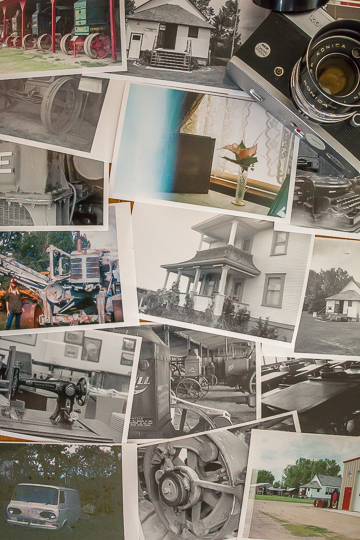
21) Just some of the photos that came of this adventure.
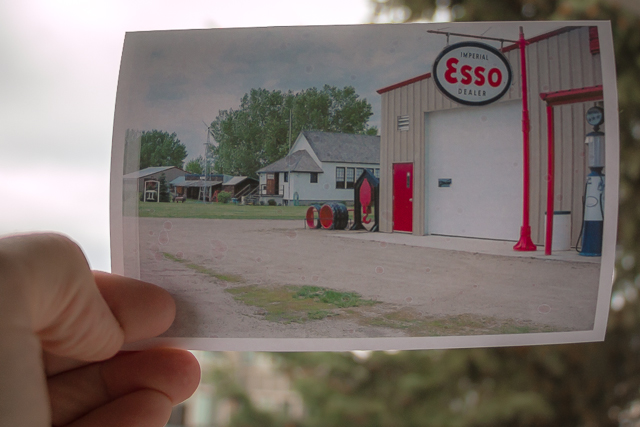
22) One of the favourites.
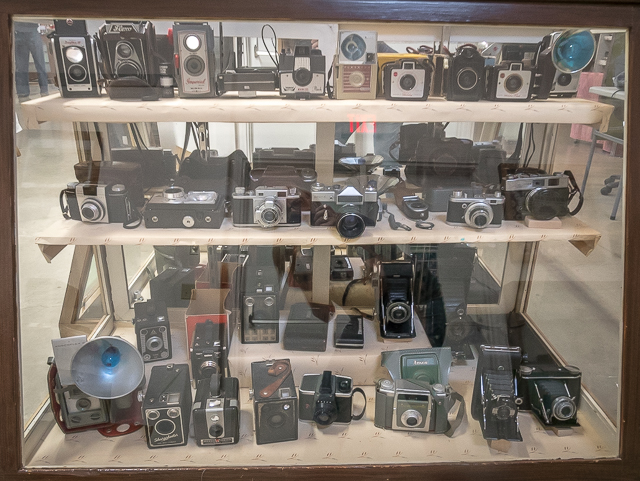
23) One of several display cases we filled to bursting.
More…
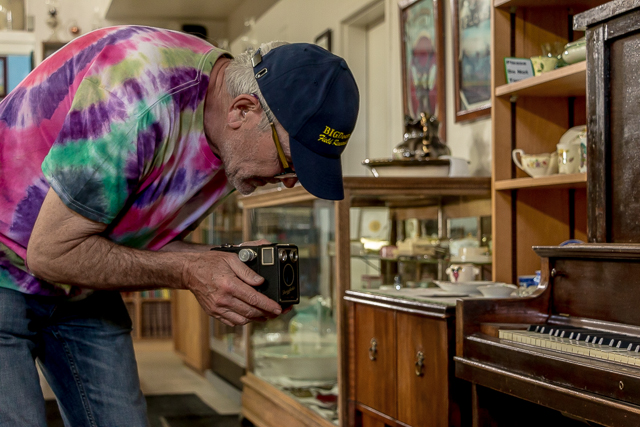
Byron and a box camera.
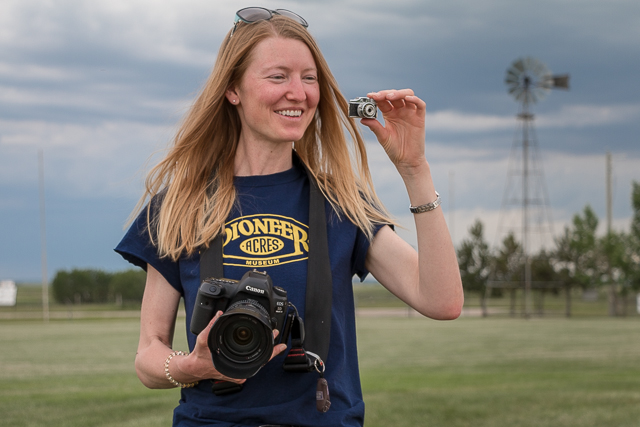
Pioneer Acres Curator Shelly – big and small.
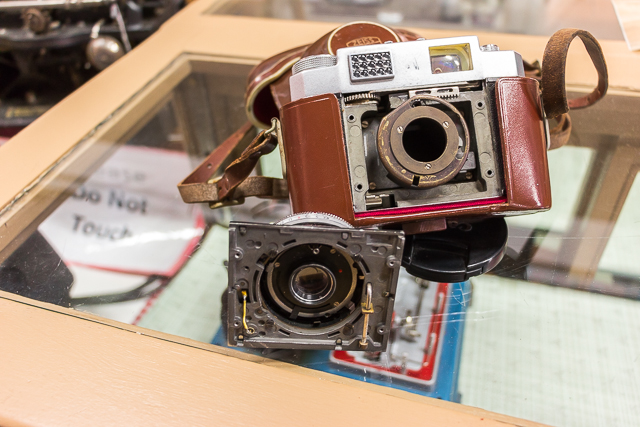
Opps, opened up the case and it fell apart.
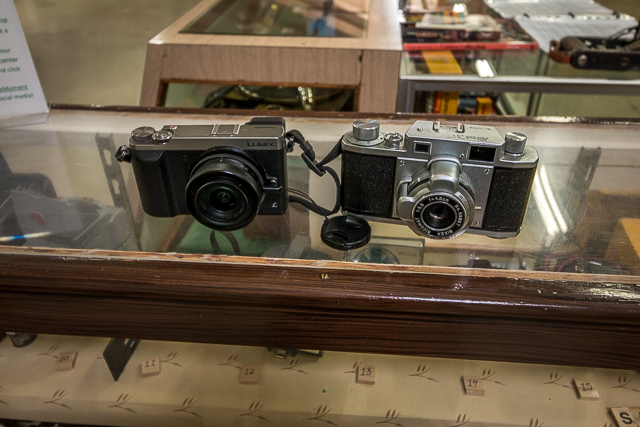
Old gear vs modern.
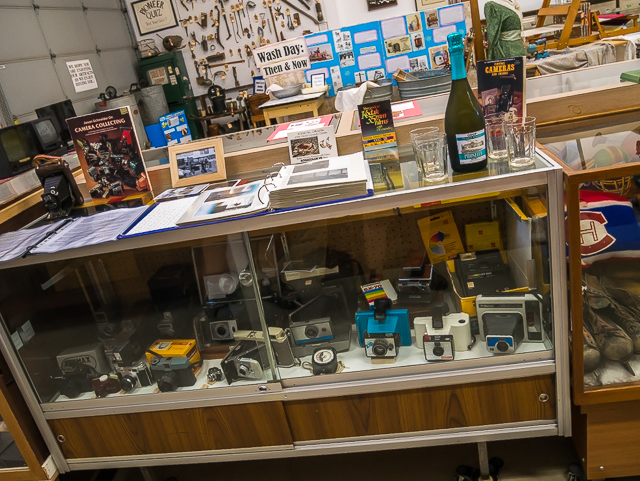
Now it’s time for champagne…in a tumbler!
The photo above shows the camera display completed. This is one of two cases full of gear from various eras. There’s the photo album and information binder on top, along with some vintage catalogues and pamphlets. After one year and many visits, it’s done.
More…More…
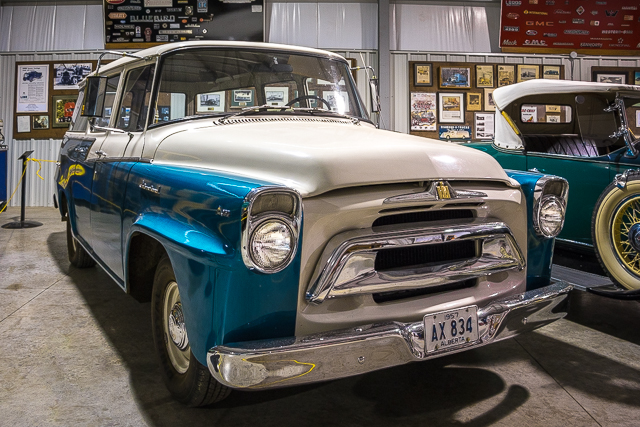
They have old trucks at the museum…
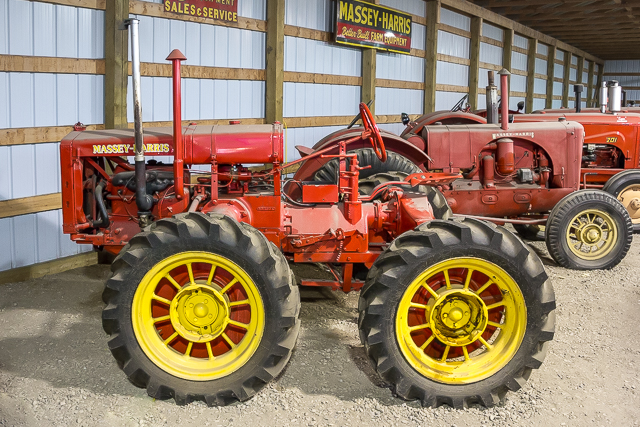
They have old tractors…
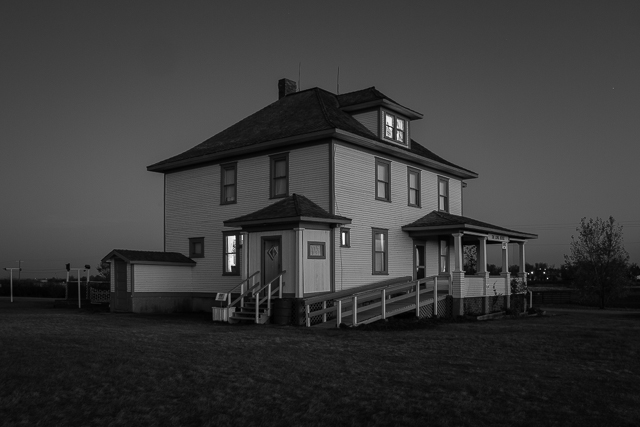
The stunning Long House.
Comments are (OFF)