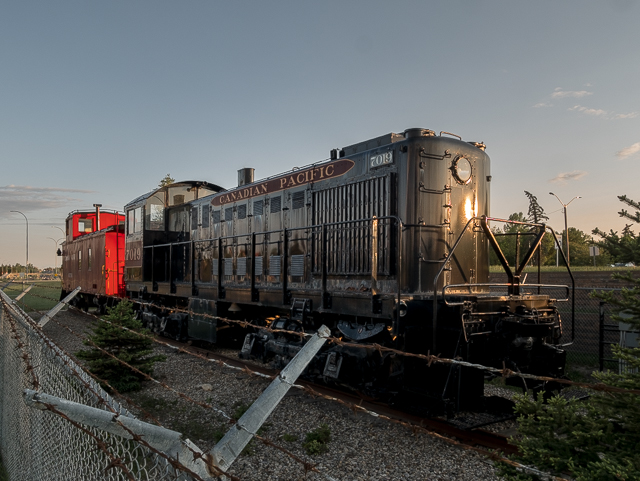
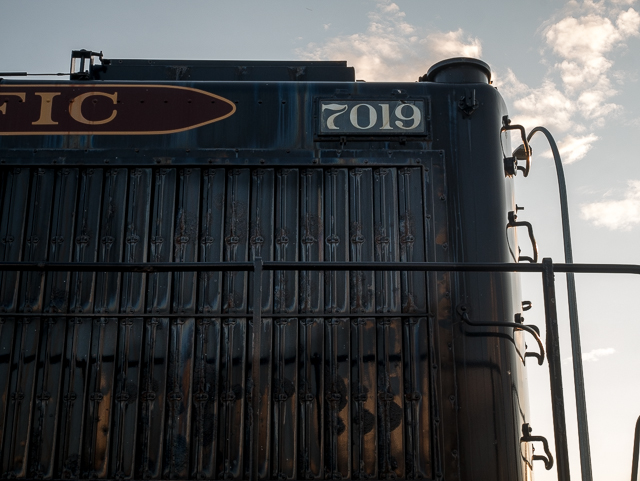
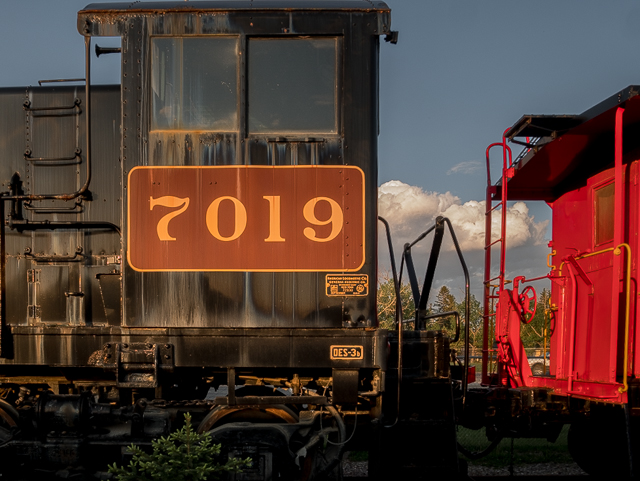
There are two locomotives at the gateway to Calgary’s Heritage Park and both once belonged to the Canadian Pacific Railway. They’re right there off 14th Street. One is from the legendary Selkirk class of mountain conquering steamers and the other not so widely celebrated. It is, however, the subject of our little chit-chat today. We’re speaking of 7019, a workaday diesel switcher that typically toiled away in obscurity, roaming yards and industrial tracks.
This locomotive represents one the CPR’s earliest diesel acquisitions and at the time, looked upon as somewhat experimental. Perhaps with a touch of scepticism by old timers as well. The success or failure of this unit, and its kin, would influence the CPR’s motive power purchasing decisions for years to come.
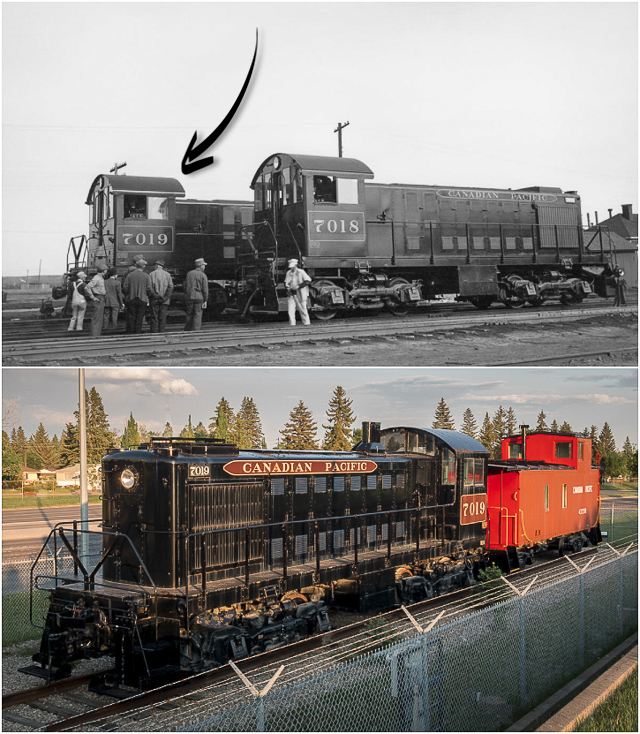
CPR 7019 Calgary 1944 & 2025: now on display at Calgary’s Heritage Park. Tidbits of railway history with Chris Doering & Connie Biggart (BIGDoer/Synd)
Thanks to “Jeff Neels” for sponsoring this and many other posts at BIGDoer.com. Be like Jeff…
It’s safe to say that steamers would continue to dominate (for a time anyway) if these early diesels proved a failure, but if a hit, it’d open up the floodgates for further orders. They quickly won over the railway, but the transition didn’t happen overnight and steam locomotives weren’t eliminated from the CPR system until 1960.
Scroll down for photos and to comment.
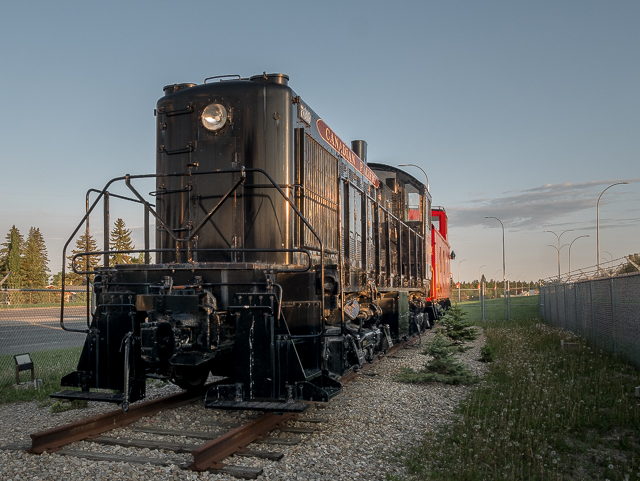
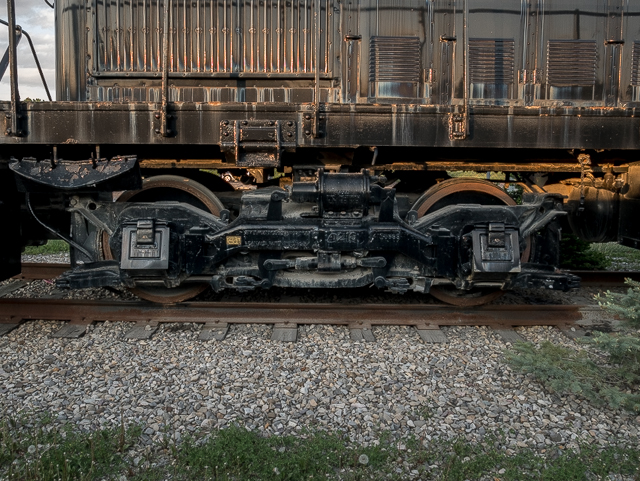
Our subject is an Alco (American Locomotive Company, Schenectady NY) model S2, a rugged and basic switcher. Offered from 1940 to 1950, this S2 dates from September 1944 (as serial #72830). At this date the CPR had only a handful of diesels and this makes it a very early example. The CPR’s oldest S2s were from 1943, with the out-shopping of 7010-7014 and 7019 is from a second order (units 7015-7024).
These early diesels were of riveted steel and that’s much like the steam engines they’d replace. Not until the 1950s would Alco switch to using modern welds.
The engine carries an early version of the CPR’s Tuscan red and black scheme used on steam engines. It later received other paint schemes including later in its service life, the CPR’s “Action Red” scheme.
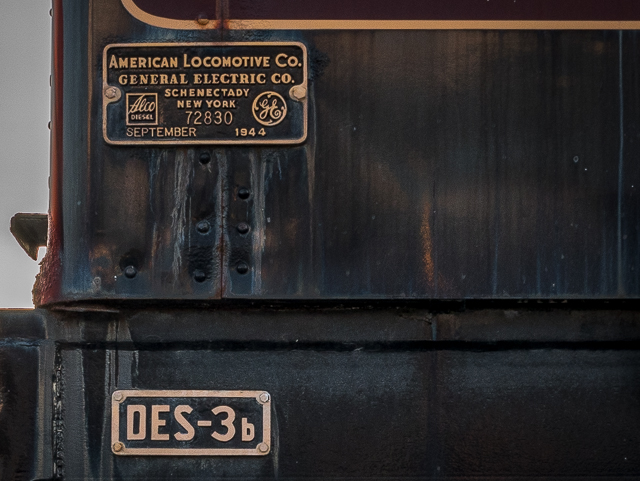
This engine was classed DES-3b when built and the plate for this, along with one from builder are visible on the cab.
Interestingly, these engines were more expensive to purchase than an equivalent steam locomotive, but their reliability and efficiency made up for the extra costs. This price difference was several tens of thousands at the time. In the end the CPR would roster close to ninety S2s (built 1943-1948) and many other Alco S series switchers that came later. They were a success.
Alco diesels used GE electrical gear – traction motors and generators for example – you can see their name on the builder’s plate. This gear was well regarded for ruggedness and reliability. Alco and GE worked closely for a time before having a falling-out of sorts in the 1950s. GE, who also built locomotives (mostly small industrial ones at the time), continued to supply electrical gear to Alco afterwards, but they otherwise ceased to cooperate together.
Later GE would expand their sales efforts and entered the larger road locomotive market. This was Alco’s bread and butter and would eventfully drive the former out of business in 1969. Today GE is the dominate locomotive supplier for US and Canadian railways. Those elsewhere in the world too.
Alco had a Canadian subsidiary, the Montreal Locomotive Works, but they didn’t begin diesel production until 1948. In 1944 the technology was still too new and the orders here in Canada too small to worry about setting up production just yet. In the interim MLW continued to build steam engines for Canadian and foreign railways, and was content to let the parent company supply diesel orders that came in.
MLW would give up building steam by the late 1940s, when it became clear that diesels would take over completely. At first, many railways thought them only useful in switching roles and approached the subject cautiously. Then sales took off, especially in the 1950s.
Montreal Locomotive Works outlasted its parent company and remained in business until the mid 1980s. During WW2, they built tanks and at other times, various other products.
Switchers often hide away in yards and inaccessible industrial areas out of the public eye. Gritty, well hidden places. As such they don’t always evoke the same romantic notions as mainline power (or steamers especially).
At the start, 7019 stayed close to Calgary so management could keep a close eye on it. The technology had yet to fully prove itself and they also didn’t want it straying too far from a service facility. Diesels turned out to be more reliable than anticipated and far above that of an equivalent stream locomotive. They were also economical to operate and service.
In later years, this engine also found work in Saskatchewan (other places too). Reader Jim Lanigan (of the Locomotive & Railway Historical Society of Western Canada) had a big hand in its preservation and sent information where it operated.
“It was assigned to Calgary from October 1944-October 1955, and Regina (sometimes Moose Jaw in later years) from October 1955 until it was retired in October 1984.”
A photo dated 1984 found during research shows it in the deadline in Winnipeg Manitoba. The always frugal railway kept locomotives in service for thirty or forty years when they could, and got every last mile out of them. Case in point here.
Shorty after retirement it was restored to its current appearance and mounted here at the entrance to the park.
Jim added this interesting tidbit…
“The Alco S2s were initially acquired on an “experimental” basis to verify the diesel-electric’s performance relative to steam locomotives in yard switching service for, in the minds of most early-1940s CPR motive power officials, diesel locomotives were unlikely to challenge steam power in passenger and freight train services.” That’s conservative thinking and it’s a pretty typical mindset for the railway.
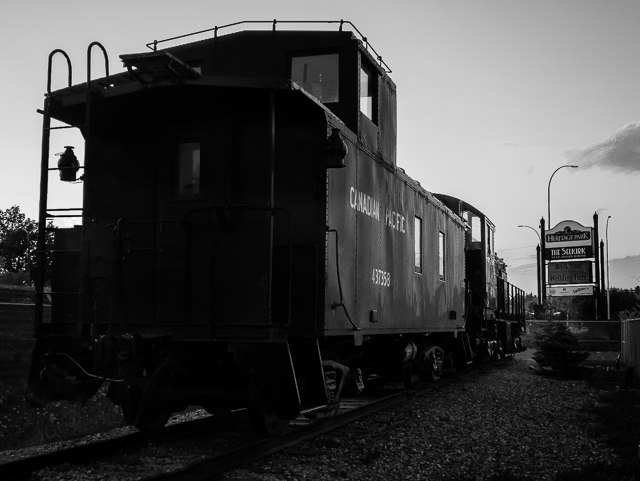
Tagging along with this engine is CPR caboose 437358. This “van” (as crews often called them) was built in 1949 at the company’s huge Angus Shop complex in Montreal. Also destined to work in obscurity, it could likely be seen trailing behind local and long distance freights across the west. It arrived here about the same time as S2 7019.
While one can still find the occasional caboose in railway service – they use them for special back up moves for example – most were scrapped in the 1980s and 1990s. As a kid you could always remember getting a friendly wave from the tail end crew in the caboose as the train passed. These trailed every train and are still an iconic symbol of the railways.
The other locomotive at the entrance of Heritage Park is Selkirk 5931. It’s from a group of the biggest, heaviest and most powerful steam engines on the CP roster. It and five others (of thirty-six built in total), were the last steam locomotives made for the railway (in 1949).
We’ve found some nice old photos of it to use much as we did here, and we’re planning a return visit to the entrance to Heritage Park to do just that. Stay tuned…but give us some time…we’re slow as molasses due to a heavy workload.
The Then image comes thanks to our pals at the University of Calgary and for this we’re forever in their debt. It’s from the Floyd Yeats collection and is dated October 1944. The caption reads Alyth and that’s the CPR’s big yard in town.
Floyd was a lifelong employee of the CPR (as a member of a train crew) and fortunately for us, he took his camera along on many of his trips. His collection is a behind-the-scenes look at railway operations of the day and are hugely fascinating.
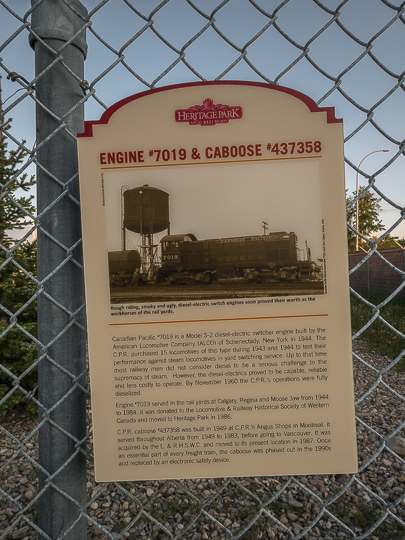
A second photo from Floyd, dated specifically October 10th, 1944, shows 7019 elsewhere in the Alyth yard and has the caption: “First day of service for diesel locomotives in Calgary”. This image also appear on the information plaque on the fence seen out front of 7019 today (scroll down to the photos).
It’s assumed the photo used by us dates from about the same time and perhaps it was even captured on the same day. The locomotive still appears clean and in railroading, equipment doesn’t stay that way for long. That being said, it’s seen in the old photo as brand new or almost so. It must have been quite the curiosity at the time and a glimpse into the future.
We don’t know who the people are in the old photo, but they seemed mostly focused on 7019. All appear to be crew, except for one person in a suit and maybe they were management. Perhaps they’re briefing crews about these recent acquisitions, but it’s only a guess. Sister locomotive 7018 also appears in the photo.
“Thank you so much for your fantastic articles and photos. Alberta and BC are dear to my heart. I could spend 24/7 here with you! I especially love the before and after articles. Keep up the great work guys!! I was born and raised in Calgary in the 50’s so this history is my passion.” Joanne Winchester Honer.
Something to say and no one to say it to? Go here: Contact Us!
Date of adventure: October 1944 (Floyd Yeats) and June 2025. Location: Calgary, Alberta. Article references and thanks: Canadian Trackside Guides, UofC Photo Archives (Floyd Yeats collection), Heritage Park, Larry Buchan (deceased – a friend who also knew Floyd), and Jim Lanigan of the Locomotive & Railway Historical Society of Western Canada.
_________________________
BIGDoer.com: Historic Connections & Comparisons – Curious History – Adventure – The Beer Parlour Project 🍺
Comments are (OFF)