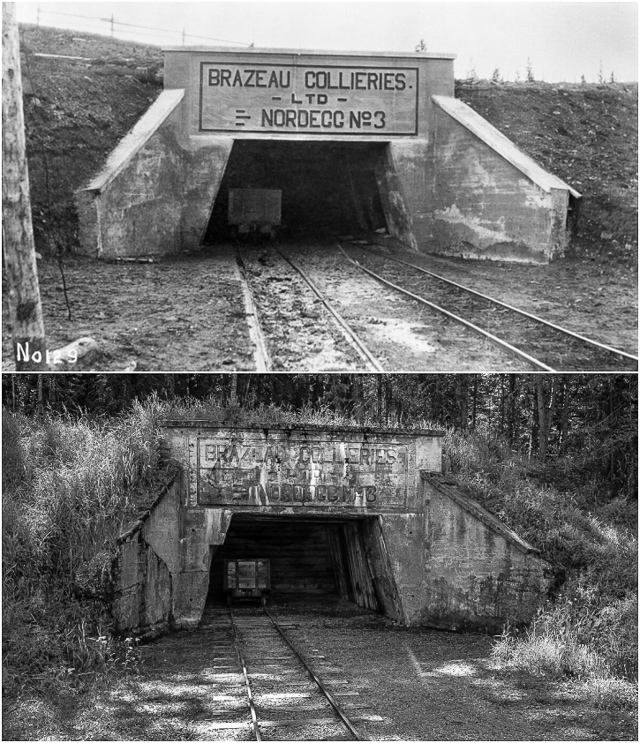
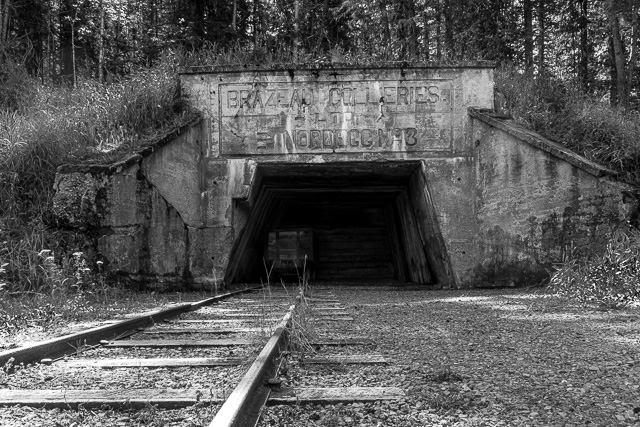
In today’s post we’ll look at the Nordegg #3 portal at the Brazeau Collieries Coal Mine Heritage Site, about 110 years apart. This structure is a sealed entryway to a maze of underground workings and just one element in this sprawling coal plant. You can tour the complex and if you like, see this very spot for yourself.
Image one shows it back in the 1910s and the other is from 2024. All those years have passed and while subject to the ravages of time, it still looks much as it did. The original image is from close to when the mine opened and the photo shared by us comes from a capture during a walkabout of the property last year. We’ve explored this fascinating place many times, and it’s always a thrill.
Brazeau Collieries Nordegg #3 1910s & 2024: a now sealed portal to the underground. Dollar store history with Chris Doering & Connie Biggart (BIGDoer/Synd)
Thanks to “Piers Fothergill” for helping out and sponsoring this post. Be like Piers…
This likely won’t be the only Then and Now Historic Comparison to come from these Brazeau Collieries adventures. There’s another possibly waiting in the wings and we’ll show it as soon as we can. Also, we’ve been digging around the archives since this visit, and recently found a bunch more photos unknown to us earlier, showing the mine industrial complex. We hope to use some of them as fodder for more posts like this and a have a bit of fun in the process.
Scroll down for photos and to comment.
The coal fields in the area were first worked in the early 1910s by the firm Brazeau Collieries. Concurrent with this mine opening, they established a company town just below the operation. They called it Nordegg, after Martin Nordegg, the founder and driving force behind the mine.
The Canadian Northern Railway arrived soon after and historically this firm (later amalgamated into Canadian National Railways) functioned as the mine’s biggest customer. This coal was prime for this purpose and helped fuel the company’s fleet of steam locomotives.
Production at Brazeau Collieries continued into 1955, when changing markets forced a closure. The railway was phasing out steam engines and with this, a large portion of their market dried up. On closing, the company did not demolish the property, as you might expect, but rather simply closed up shop and walked away.
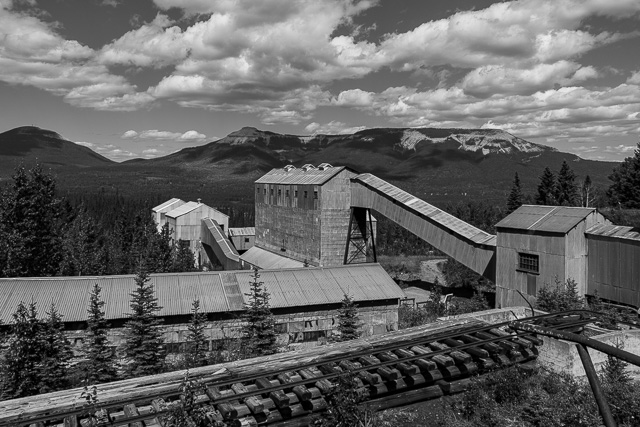
Fast forward to today and it’s a literal time capsule from long ago and you can pay it a visit. Everything, for the most part, is as they left it and because of this there’s a special feeling awaiting visitors. You can just imagine it – it’s lunch time and any moment now, the whistle will blow and everyone will return to work. It’s been seven decades since that happened, but it looks and feels like they only just left.
There’s several coal seams in the Brazeau/Nordegg coal fields, and the firm worked numbers two and three of five. They were the thickest of the group. The number three seam (Nordegg #3) averaged about 15 feet (4.5-ish metres) and the number two seam was in comparison about half that. That’s some pretty decent diggings and to boot, the coal has good burning qualities.
A layer of rock separated the two seams, with the Nordegg #3 level being the deeper of the two.
From opening to close, the Brazeau Mine extracted over nine million tonnes of low to medium volatile bituminous coal from those hills in back. Some came from later surface pits, but the majority originated underground. A lot of it passed though the Nordegg #3 portal seen right here, one mine car after another. At a few tonnes per (give or take), it doesn’t take long for the numbers to add up.
What is that…let’s see…hundreds of thousands of coal cars…close to a million? We’re just using sloppy math and it just keeps adding up. Then consider they needed an equal number heading back into the depths for loading. Wow..,simply wow! Most posts suggest the daily output was some fifteen hundred tonnes per day, at times of peak output. When business was slow, it could be much less.
The Brazeau Collieries used the trade name “Brazeau Bituminous Steam Coal” for their commercial products. Steam (or Thermal) coal, as implied, was best suited for raising steam, in locomotives, but also in industrial plants. In later years, the Brazeau Mine also made briquets from fine coal into less volatile stuff, for domestic home heating use. Out in rural areas especially, coal heating was common at the time.
On October 31st 1941 an underground explosion in the Nordegg #3 level killed twenty-nine miners. “An inquest held in November 1941 found the causes of death to be carbon monoxide gas.” – Provincial Archives of Alberta. This gas accumulation was proceeded by an explosion. So the blast didn’t kill them, but the afterdamp, as it’s called, which was a product of the explosion, did.
Work resumed a month and half later and this went down as the worst disaster at the Brazeau Mine. There were other fatalities over the years, but nothing where more than one or two workers were involved. Underground mining was and is inherently dangerous, but doubly so in the old days. Safety rules were sometimes questionable, attitudes of management and workers were often indifferent or even reckless. The risks overall were many, yet they were almost downplayed by everyone.
A rescue crew of other miners entered the portal soon as the fumes cleared. Thirty more workers underground in Nordegg #3 survived and were evacuated safely. The explosion did not cause extensive damage, but still some time passed before production resumed. The bodies of the deceased would have left the mine from this very opening and that’s a sobering thought.
They had a life of hard labour and it all ended here in the dark depths of the Alberta front ranges.
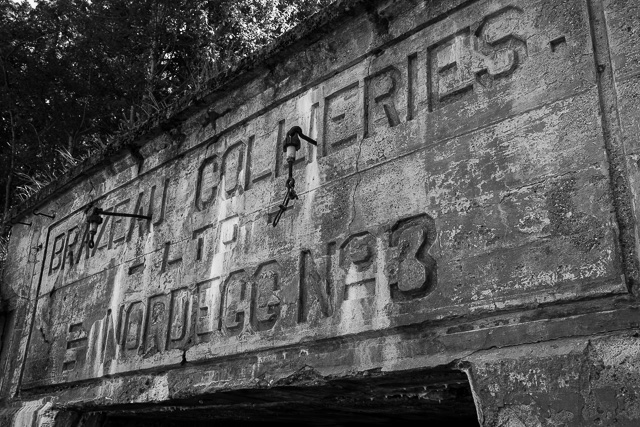
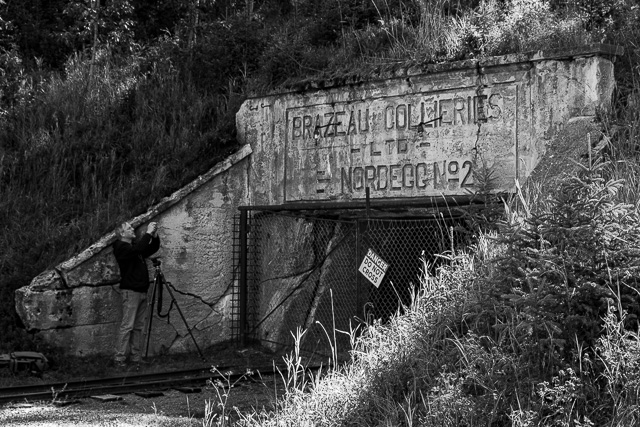
The portal of Nordegg #3 is of cast concrete and reads “Brazeau Collieries Ltd, Nordegg No 3”. It’s a bit more chipped and rough today, but in remarkable shape otherwise. The entry goes in a short distance and then is blocked off. The underground workings continue on many kilometres from there and they didn’t get it all. Had markets not collapsed, they had enough coal to continue on from some time after.
A mine car was placed to be part of the display and is in roughly the same location as the one appearing in the Then photo. A coincidence perhaps or something deliberate? Maybe they saw this old photo and placed it based on that image? It’s possible.
Notice the lack of trees above the portal in the old photo and how different it is today. Nature returns and with a vengeance.
The portal of Nordegg #2 is not far away and we’ve included a photo of it in the comments. We shot a Then and Now with it too at the same time, but we’ve not yet gotten to it. We have hundreds of already-shot comparisons in the can, and there’s a big backlog processing them. If it works, expect us to post it on our social media pages, and/or here.
The community of Nordegg is sometimes called Brazeau, after the mine, but they are one and the same.
The Then photo is thanks to the University of Calgary archives and while not specifically dated (1914 is suggested), it appears it was very early on in the mine. The concrete and the painted lettering looks new and the lack of foliage suggests this as well. The first commercial production at the mine was about 1912, so we’d guess about this time or shortly after.
The photo comes from the Canadian Pacific Railway Land Settlement and Development collection, which is odd. The CPR had no presence in Nordegg, but perhaps early on they had aspirations to do so. Who knows? They did make it to Rocky Mountain House, some ninety clicks away, but that’s it.
The image reads “No 129” in the lower left corner and perhaps this marks it within a series. There are other photos from this collection showing Nordegg and they seem to be of the same era.
We hope you enjoyed this Then and Now Historic Comparison and stay tuned for many more to come.
“They present well researched articles that do a lot to preserve our history and heritage which is very important. We are losing many of our landmarks such as old grain elevators, rural churches and commercial buildings in many of our small towns. Chris and Connie have done a lot to highlight these passings and to keep us informed.” Lynn Bardsley Redekopp.
Something to say and no one to say it to? Go here: Contact Us!
Date of adventure: Ca 1914 and August 2024. Location: Nordegg #3 is at the Brazeau Collieries Site, Nordegg Alberta. Article references and thanks: Alberta Energy Regulator, University of Calgary archives, Brazeau Collieries Mine National Heritage Site, the pamphlet Report on the Nordegg Coal Claims, Hermis.Alberta.ca (Heritage Resources Management Information System), book – Annual Report of the Mines Division of the Dept of Mines and Minerals of the Province of Alberta 1951, book – Days Before Yesterday – History of Rocky Mountain House district, Edmonton Journal 31/10/2012 and finally Rob Pohl for hosting us. Now catch your breath…
_________________________
BIGDoer.com: Historic Connections & Comparisons – Curious History – Adventure – The Beer Parlour Project 🍺

Comments are (OFF)