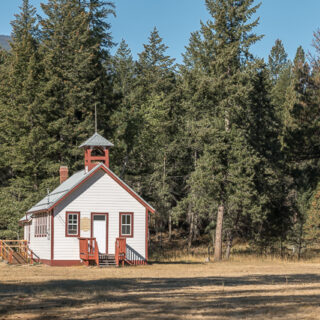
Long ago, there were once thousands of little one-roomers like Liberty School scattered across rural Alberta. There were so many that we doubt an accurate count is even possible. Typically located along some remote middle-of-nowhere backroad, they were in service of students living on nearby farms or ranches.
Their location depended on the local population density and other factors, but as long as there were minimally a few kids in the area, the powers that be would establish a school district there. Often in buildings no larger than a two-car garage, they would usually have an enrolment counted on a hand or two. And maybe a toe.
Liberty School District (#1940) 1909 to 1939. A ten mile, uphill walk with Chris Doering & Connie Biggart (BIGDoer/Synd)
Thanks to “Anonymous” for sponsoring this and many other posts at BIGDoer.com. Be an angel too…
A single teacher was usually the staff for a one room school and this person lead a lonely, thankless existence. Locations were remote and the pay was dreadful. Research tells a story of teachers overworked and underappreciated. Turnovers were high and a new school year usually meant a new face at the front desk.
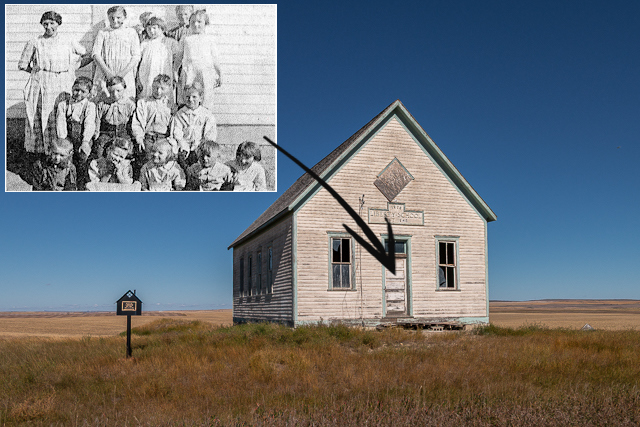
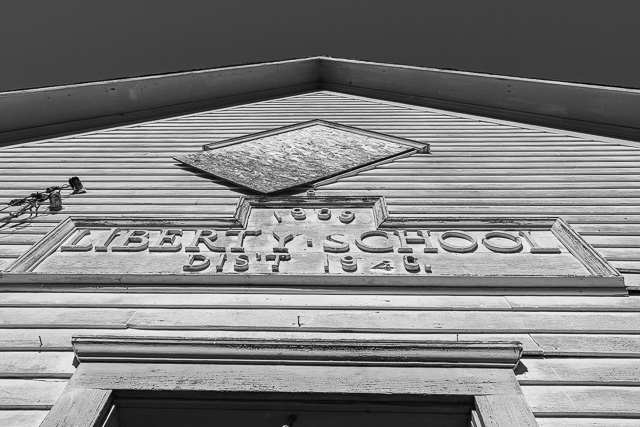
Liberty School –historic plaque (left) & class of 1922 on the front step (inset).
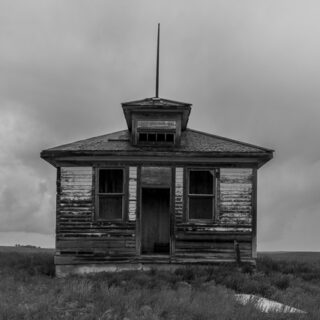
Times change and most one room schools are long gone. The rural population is a fraction of what it was and with good roads, unlike the old days, it’s just simpler to bus kids to some central location now. For one reason or another, a few of these old structures have managed to survive into today. Many are in an abandoned state, sadly and this includes the subject in this post.
Scroll down for more photos and to comment.
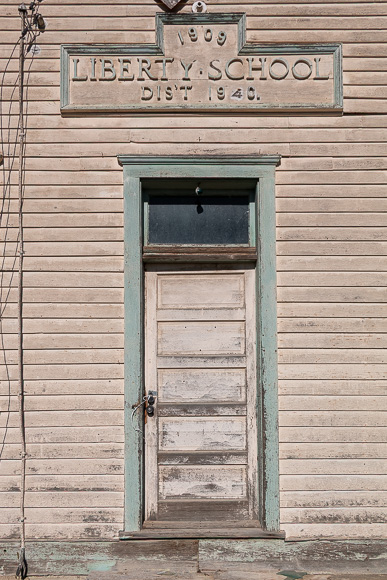
The school, as district #1940, dates from 1909 and this was about the time the area opened up for general settlement. It shared a name with the local post office (down the road a bit), even retaining it after the former changed to something else a few years later. It joined several other schools established in the area around that same time and some were were built to the same pattern.
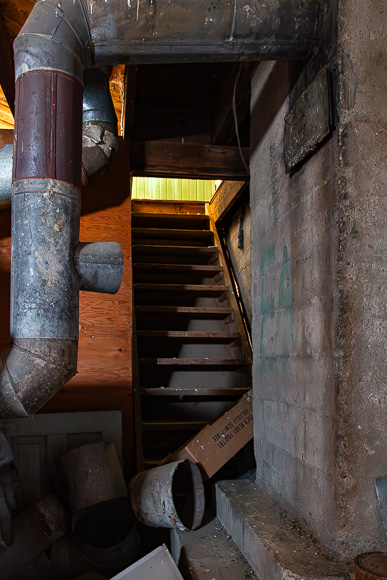
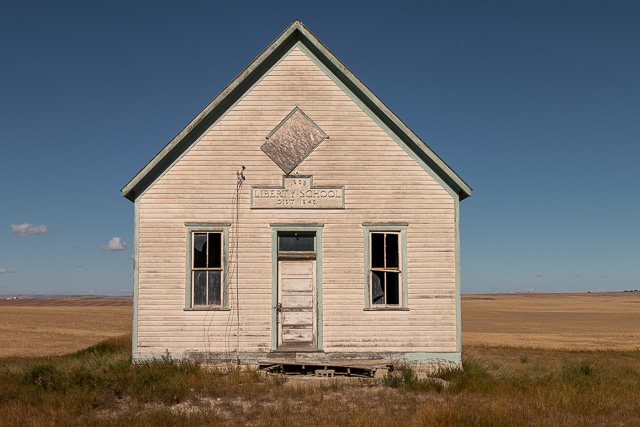
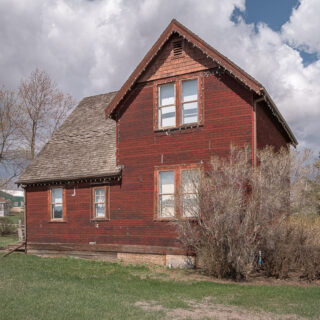
The building is 24ft by 40ft (7.3m x 12.2m), so on the larger size when compared to most other one room schools. It’s much taller than typical too. Not all one room schools had a basement, but Liberty did. It may have been simply for storage or living quarters for the teacher. Many times they’d take up residence at a nearby farm, or live in teacherage (small cabin usually) on the property, but an in-school apartment was not unheard of. The history book is quiet on the subject.
The tall steeply pitched roof makes the building seem much larger than its modest footprint would suggest. It was said to cost $2000 to construct.
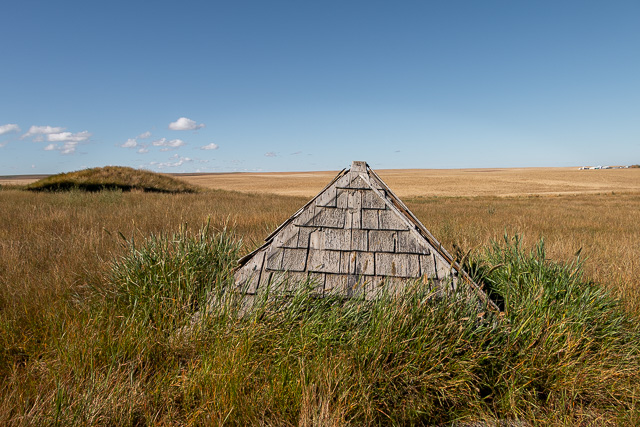
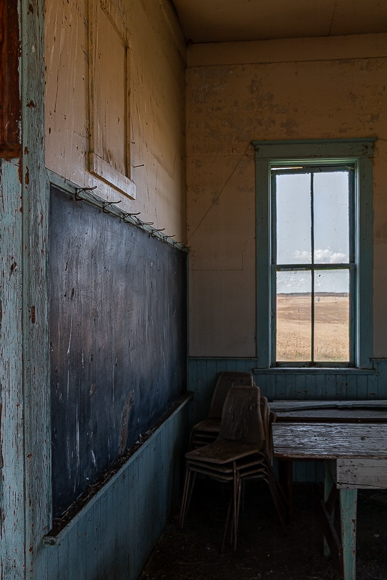
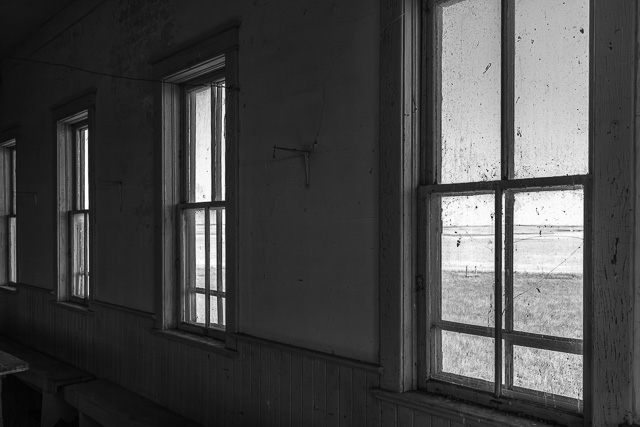
Coal was used to heat Liberty School and the chute for this is still in place downstairs. Electricity was a later addition and before they relied on natural light (the reason for all those big windows) or oil lamps for illumination. Outdoor biffies were the “facilities” and students could look forward to a cold bum come February.
The structure is on small plot of land surrounded by fields and with a road out front. Off in every directions there is nothing else. This sense of being alone must have been a bit overwhelming in the old days, especially for the teacher. Even today, that’s how it felt. We suspect there used to a swing set or some other play equipment on the grounds and a place for the kids to frolic come recess or lunch.
They taught grades one through eight here originally, although in later years higher grades were added. However, it was rare for students to go the full distance since many had to drop out early to work on the farm. It would not be unusual for kids to travel a fair distance to get to class (ten miles, uphill – both ways – and battling wild beasts the whole time – if we believe the legend). They came on foot or by horseback.
Enrolment at Liberty School seemed to average ten to twelve students most years and that’s based on old class photos we found during research. Many of the kids were often related in some way.
The teacher lists shows the majority were women and this was typical of the era. Most lasted a single season, then moved on. New school year, new teacher! They had to be proficient in all courses needed by all grades and have a patient demeanour.
Expectations from both the parents and province were high. All the teachers got in return was meager pay and perhaps a few fond memories. If that counts for anything and we suspect to some degree it does.
Since any one grade might have only a student or two, learning was very hands on. While the teacher taught one grade, kids in the others did book work.
At times this building functioned as a makeshift church.
Liberty School closed at the end of the 1938-1939 season. Roads in the area had improved enough that a number of rural schools consolidated in a nearby town. Students then travelled by bus.
For a time after the building sat empty, but it’s not exactly clear for how long.
Liberty School found a new use as community hall in the 1950s. For a couple decades, it hosted bingos (and “whists”), dances, get-togethers and weddings. And wedding anniversaries…”At least one 25th wedding anniversary dance was celebrated in the same school that had hosted the original wedding dance.” That is so cool!
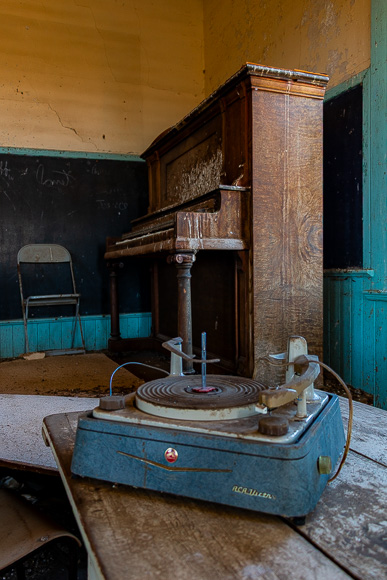
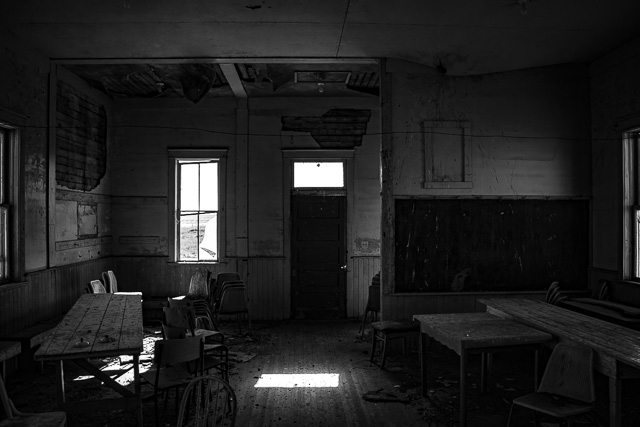
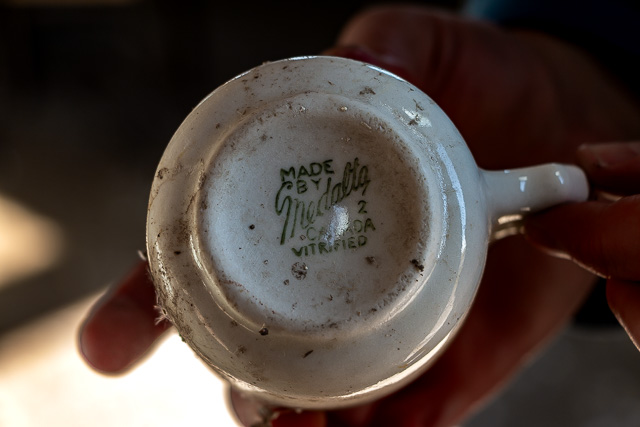
Things found inside, an old piano, TV, records player (both from RCA-Victor Canada) and long tables with benches, reflect that later era. During elections the school functioned as a polling station.
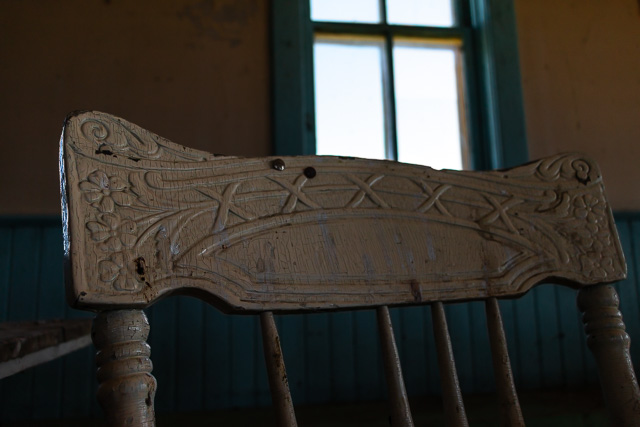
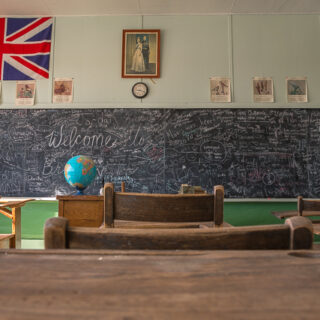
By appearances it’s still very much a school inside.
Old papers found scattered on the floor suggests it saw use as a community hall into at least the 1970s. Liberty School appeared in a National Film Board of Canada production “Prairie Women” in the 1980s. We’ll have to look for that one.
A little tidbit from the local history book about a Lion’s Club event held there yearly…
“The Club sponsors a Turkey Shoot at Liberty School every fall around Thanksgiving time, and draw(s) hot-shots for miles around…” -Snake Valley: a history of Lake McGregor and area.
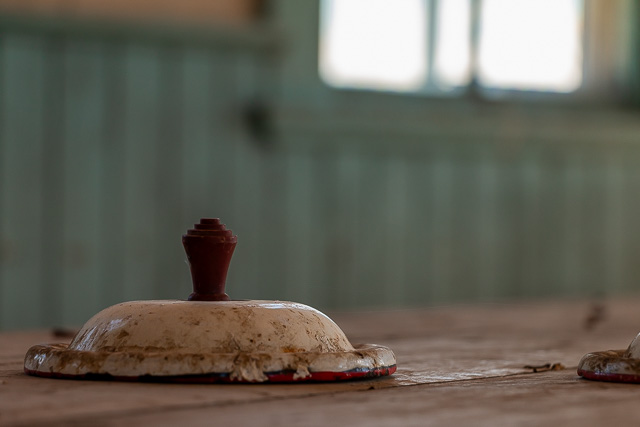
The cupola that once held the bell used to ring in each new school day, is now beside the building in the grass. There’s an historical plaque out front too.
Overall, the structure seems pretty solid and sound. Birds have gotten in and you know what mess they make. The roof looks in fine shape and at some point in recent memory, had new shingles applied.
Talk from a while back suggested there were plans to move Liberty School to the museum in Milo but we’re not sure if that’s still in the cards. Securing funds for historical preservation is a near impossible task here in Canada, and that’s a pity.
So for now the building sits alone on the prairie down some seldom driven road, and visited by few. Stand on the front landing where long ago the class posed for their yearly group photo and imagine yourself there. It’s 1928, it’s a youthful, cocky you, a couple of your siblings, kids from neighbouring farms, one green behind the ears teacher and some guy with a camera to record it all.
The memories: a small school building all by itself on the endless plains that is this part of Alberta, the wind, the blustery winter, the broad sky, community, good times, homework, an “A” on one subject and a “D-” on another, getting the strap for being a mouth piece, cursive writing, book reports, fields of wheat and the overpowering sense of isolation. We can picture it.
The first one room school in Alberta goes back to the 1880s, but most were from the period 1900-1930. This was a time of accelerated settlement in the province. We’ve heard there was anywhere from two to three, to as many as five thousand. We wonder if anyone knows for sure. Most closed by the 1960s but a few, due to special circumstances, held on into the modern era.
Of those left standing, and there’s a number of them, most are in a derelict state. Frugal farmers* often purchased some for use as granaries, or moved them to their property to function as a shed. It’s doubtful many are still used in either capacity.
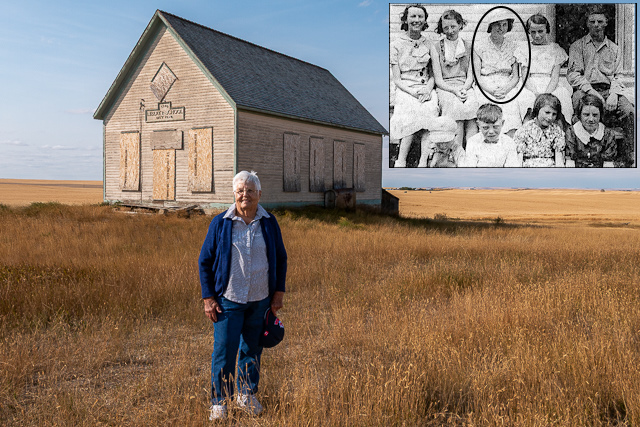
Meet Phyllis…
There we were photographing Liberty School one day, when a car showed up and out steps two people. Soon a conversation starts. We’re introduced to Phyllis, coming in from her retirement home in High River, and her daughter. It seems Phyllis attended class here, long ago and wanted to stop by to do a little reminiscing. We all like to return to places of our youth.
We chatted more and heard her story. In her late 90s, Phyliss looked nothing of her age and seemed more youthful in mind than those advanced years would suggest. Sharp as a tack, they’d say. Upbeat and personable too.
When asked about the 10 miles to school legend, she pointed to spot off in a field not far in the distance and in a matter of fact way, said that’s where she lived. We were so looking forward to hearing a tale of hyperbole – you know of mountains and blizzards, of lions and crossing three time zones to attend class.
It’s a chance encounter and after a quick photo, she and her daughter are gone.
With a little later research, we found she was the last student alive that attended this school. That’s both something to celebrate and a bit sad knowing it all ends with you. At least that’s how it’d feel for most folks, we’d suspect, but not Phyllis and she sort of shrugged it off when we later chatted. Sort of a whatever moment. She, herself was a teacher for a time.
This late summer day in 2020, we understand, would be the final time Phyllis would visit Liberty School. She passed away a year and a few months later, soon after topping 100.
“Phyllis grew up east of Milo on her parents’ farm, attended the one-room Liberty School, worked for room and board to attend high school in Milo, and then earned a teaching certificate from Normal School in Calgary. When teaching for 2 years at East Majorville School, Phyllis met Jack. Early in their 43 year marriage, they settled to farm at Ensign…Phyllis substitute taught to supplement the farm income and enjoyed community involvement.” – from the obituary for Phyllis Hunter (summarized).
Through these doors…
This post is from two earlier articles published in 2016 and 2021, combined and with updates. The status of Liberty School really hasn’t changed much since, but certainly time is ticking.
Something to say and no one to say it to? Go here: Contact Us!
Date of adventure: October 2016 and September 2020. Location: Vulcan County, Alberta. Article references and thanks: University of Calgary photo archives, the book Snake Valley – a history of Lake McGregor and area, FindAGrave.com, various records of passing in the Alberta Government archives and Phyllis Hunter (nee Prentice).
_________________________
Offbeat Adventures – Lost & Forgotten Places – A Slice of History – Connections & Comparisons – The Beer Parlour Project🍺

Comments are (OFF)