If we asked you about structures associated with Canadian railways in the old days, you’re likely to mention stations, water towers or maybe roundhouses. Everyone knows of them, even if few (of any) still exist. A building that was once as common, yet lesser known, is the section house. These were once located at regular intervals along most trunk routes or branch lines and one is today’s subject.
They functioned as line-side accommodations for the “section man”, and his family. This person’s job was to inspect and maintain one “section” or length of track. He’d patrol the line on a human powered conveyance or mechanical speeder, tightening loose track bolts, resetting spikes, cleaning accumulated dirt or ice from switches and so on. They had an endless variety of tasks.
Canadian Pacific Railway Section House: the “section man’s” home. Overlooked history with Chris Doering & Connie Biggart (BIGDoer/Synd)
Thanks to “Anonymous” for sponsoring this and many other posts at BIGDoer.com. Be an angel too…
This was the day to grind, no matter the weather or conditions. For jobs too big for himself, he’d call in the maintenance of way department and let them handle it.
Scroll down for photos and to comment.
This is an old post from 2014, long since archived, but brought back for your enjoyment. The section house is still there (on private property), but we never photographed it as well as we did on this first visit. We updated the posts, but reused the old photos for this reason. Enjoy, and now on with the show…
A section house was always near the tracks and usually within sight of the train station. It wasn’t uncommon for the section man’s wife (it seems marriage was a requirement) to set up a garden behind the house, and perhaps adorn the building with potted flowers or other personalized decorations. Many photos of old, showing these buildings in use seem to include these elements, plus always a clothes line.
Living lineside must have been interesting, what with all those trains passing close by, shaking everything and making all that noise. Keeping the kids away from the tracks, soot from the locomotives and being woke up at odd hours…it must have tested a lot of marriages.
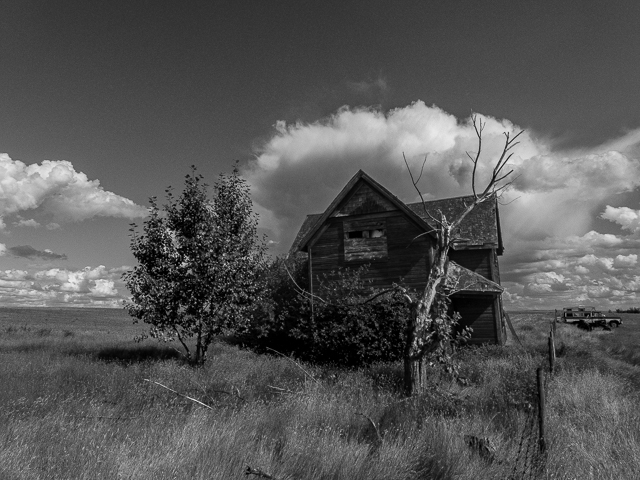
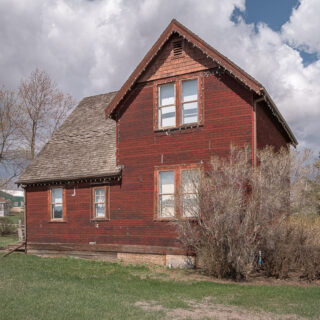
Section houses were typically built to a common pattern for each railway, meaning every one looked like every other. For the Canadian Pacific, this meant a modest and simple L-shaped, two story house. The railway always painted them up in the firm’s trademark shade of red/brown. Most CPR-owned buildings had this same colour applied.
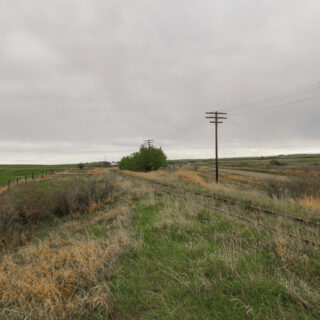
This particular section house dates to around 1915, when the railway built a branchline into area from the east. The track ran from Stirling Alberta, south of Lethbridge and eventually went all the way into Saskatchewan. The line through here lasted in the late 1990s.
This section house was one of hundreds of such buildings belonging to the railway and scattered across the province.
With changes in operating procedures over the years, the railway phased out section men over time. It seemed they started in the 1950s and a couple decades later, these positions were all pretty much gone. The tracks are still inspected and maintained, but now it’s done by roving crews.
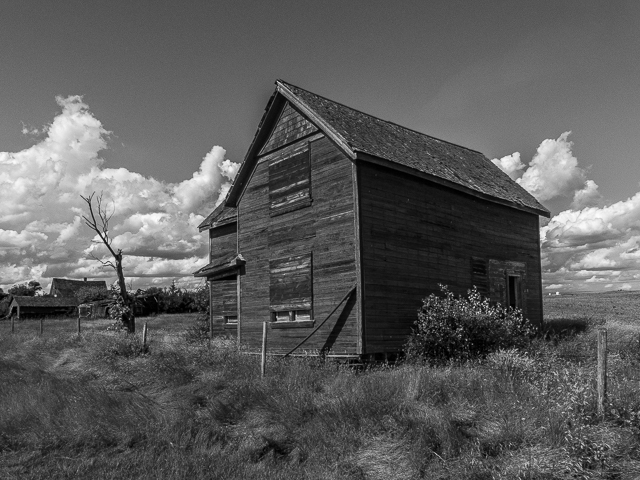
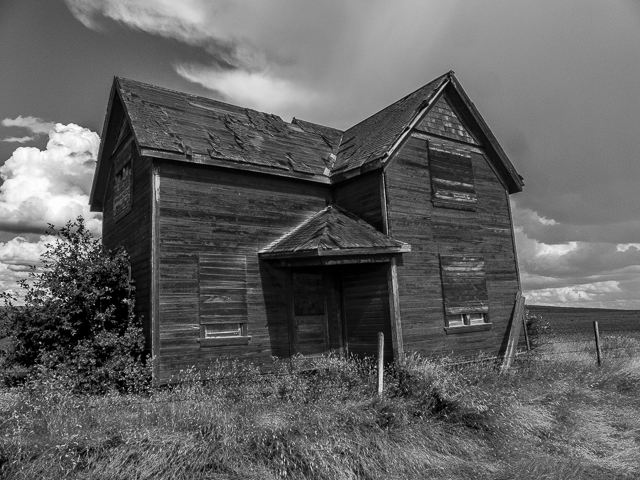
Section houses were usually torn down when no longer needed, although a few managed to survive for various reasons. Individuals bough some and moved them away for use as homes or sheds elsewhere. That’s how this one got to where it is in Orion Alberta, away from and on the opposite side of town from where the tracks used to be.
Interestingly, it did not come from this community (although there was once a section house here) and instead a person hauled it in from the next town west down the line. That’s Pakowki and it’s a total ghost town now.
The plan was to move the section house to a nearby farm, but with the unexpected passing of the owner, it only got part way. This happened in the late 1970s or early 1980s – no we spoke with in town was really all that sure. So there it sits, boarded up, abandoned and forgotten. It seemed structurally sound at the time we captured these photos, and on recent visits, looks about the same.
We’re basing that on a cursory look – the building is sealed up, so that helps keep it from degrading as quickly.
Beside this section house, we know of a few others in the region that still survive. There’s one in Manyberries, in the next town just down the same abandoned railway line and it sits where built. The owners (who also owned the old train station) seasonally rented it out to hunters and the like, but on more recent visits it looked unused.
There’s another at Champion Park, a vintage railway equipment collection near Calgary. Team BIGDoer helped paint that building a couple years back (we love to volunteer at museums), but we’ve not seen it since.
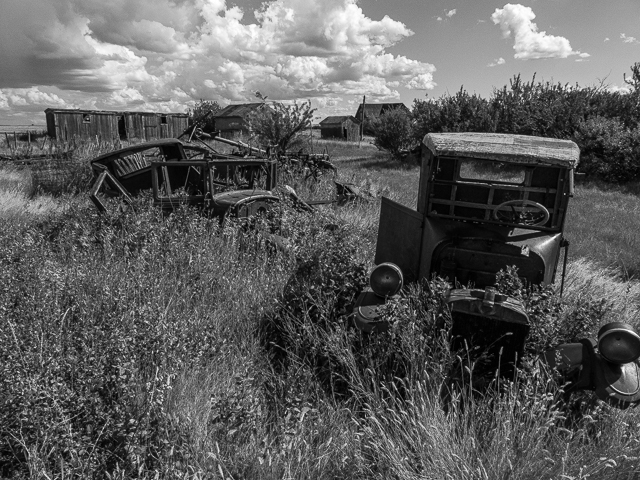
There was an interesting collection of old vehicles close to the section house. Based on what we’ve seen in more recent visits, most (all?) of the metal stuff mentioned in this last passage is gone.
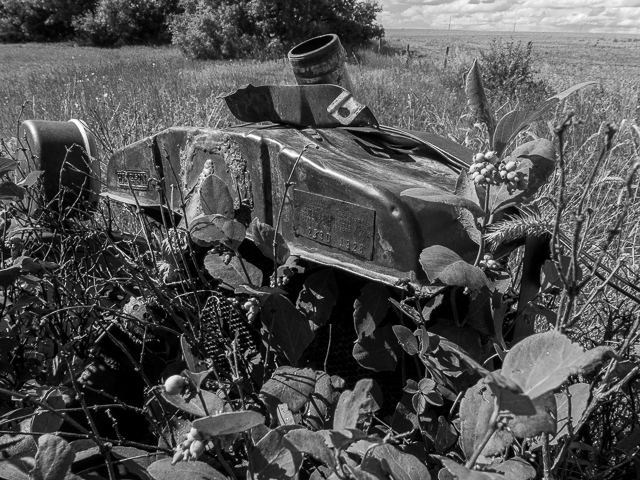
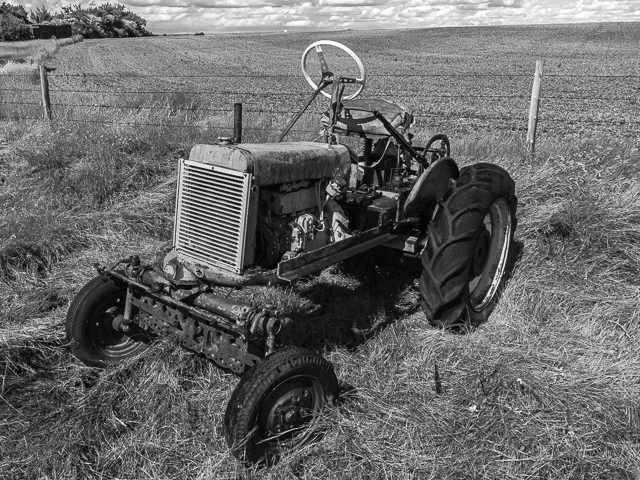
The menagerie includes a curious homemade-looking tractor – bless the frugal farmer! It looks to be made of salvaged car and machinery parts, odd bits of angle iron, and other metal bits they probably had lying around.
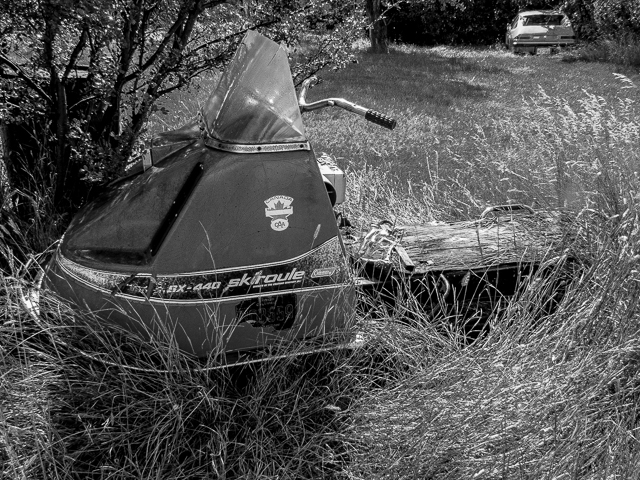
Nearby there’s a 1970s Coleman Skiroule snowmobile (two of them, in fact). In that era there were dozens of firms who made sleds, but very remain. This is the first time we’ve come across this make, so they must be somewhat uncommon. Sledding on the prairies was and is a right of passage.
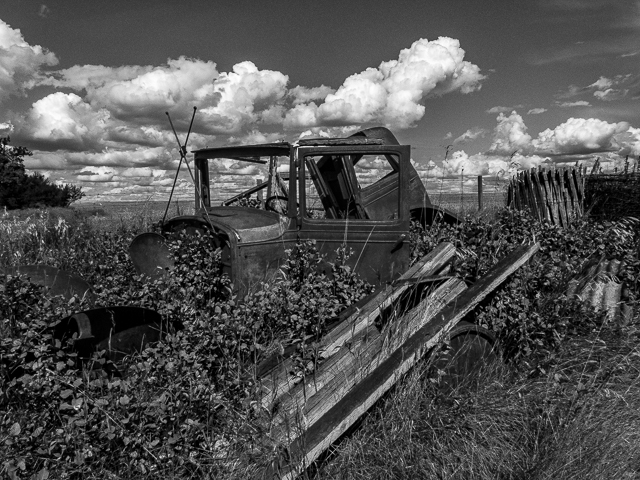
A rare Graham-Paige car (late 1920s), all twisted and mangled, is an interesting find. This make was more upscale oriented and never that terribly common. It’s about the last brand of car one would expect to find on the remote and very rural Alberta plains. We spent a disproportionate amount of time trying to identify it, but with no luck. In the end we had to turn to experts online for help (in particular, thanks Bruce). It the first and only one we’ve ever seen from this automaker.
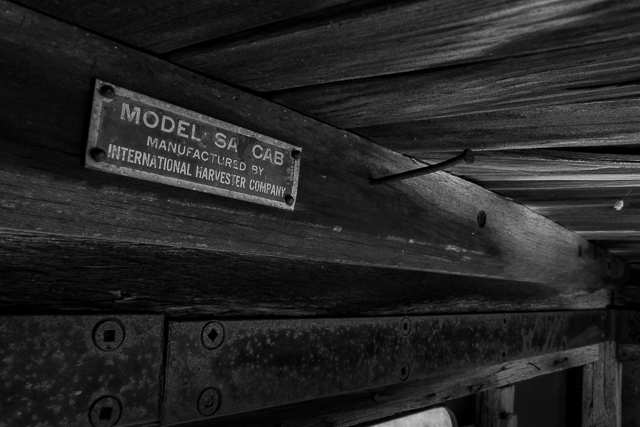
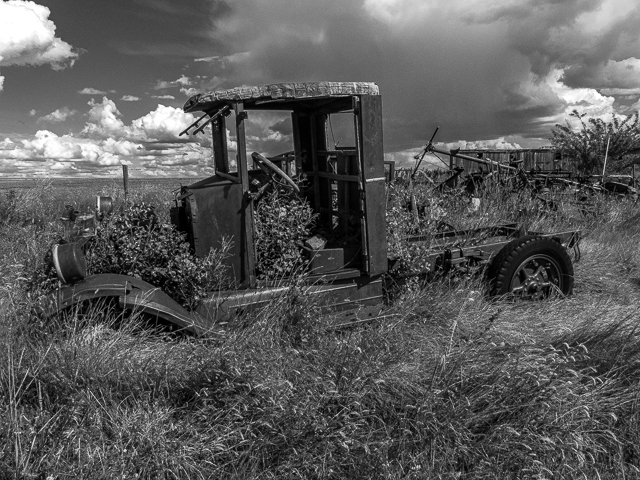
Nearby is remains of an International Harvester truck (a plate reads “SA Cab”) and it’s an oldie. 1920s? It’s a workhorse from another time and has a simple, utilitarian wood-framed cab, with zero creature comforts. You had to be tough to drive this one, but of course, people were back then. Both the truck and that rare Graham-Paige must have been sitting here for some time.
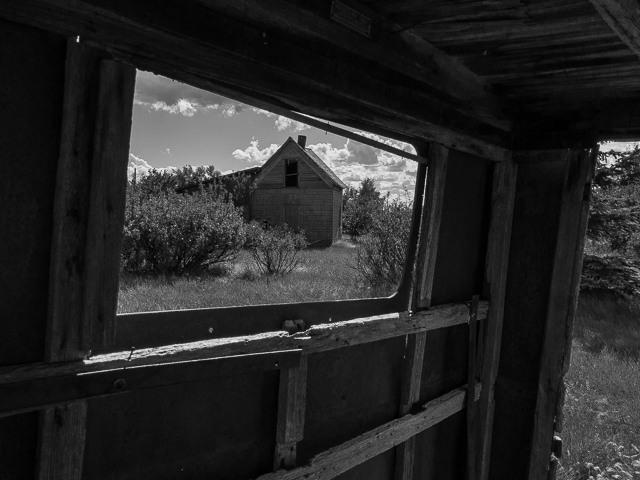
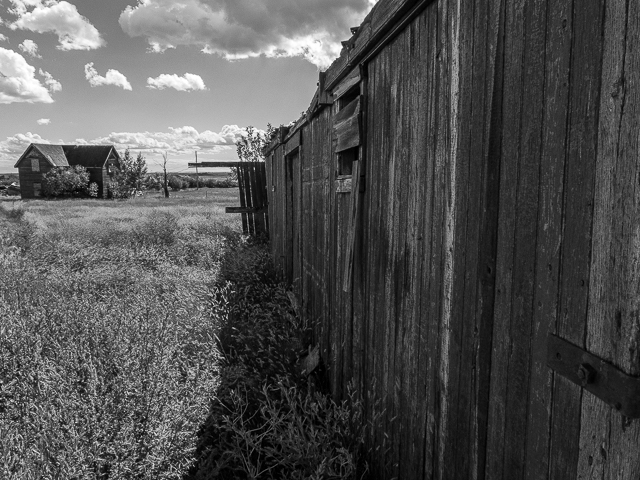
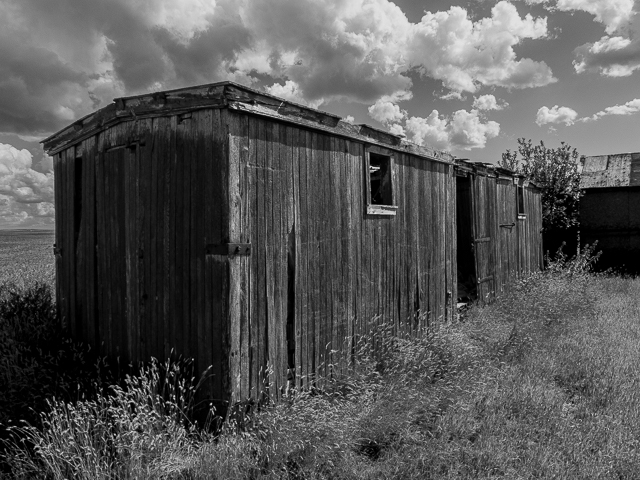
A vintage boxcar was made into a shed. Given it’s all wood, including the underframe, it’s from no later than the early-1900s or thereabouts. Generally a wood car would last a couple decades in service, so maybe it’s been here since the early days. Either way, it’s ancient.
It was not unusual to repurpose old railcars like this and we know of a few dozen examples in Southern Alberta. We could not find any lettering and it must all have faded away, we guess. We didn’t notice if this boxcar was still in place on the more recent visits since access is different now.
There’s only a handful of people in Orion today and the section house is a reminder of what used to be. You can’t help feel a bit of sadness when looking at it, but know it was once someone’s home. A place of family and happiness. It’s all quiet now.
Something to say and no one to say it to? Go here: Contact Us!
Date of adventure: August, 2014. Location: Orion, Alberta. Article references and thanks: The late Boyd Stevens of Stevens Hardware in Orion (a long-time resident), Orion Co-op, miscellaneous CPR records, University of Calgary archives, and archives @ Exporail. The section house is on private property and we visited with permission.
_________________________
Offbeat Adventures – Lost & Forgotten Places – A Slice of History – Connections & Comparisons – The Beer Parlour Project🍺

Comments are (OFF)