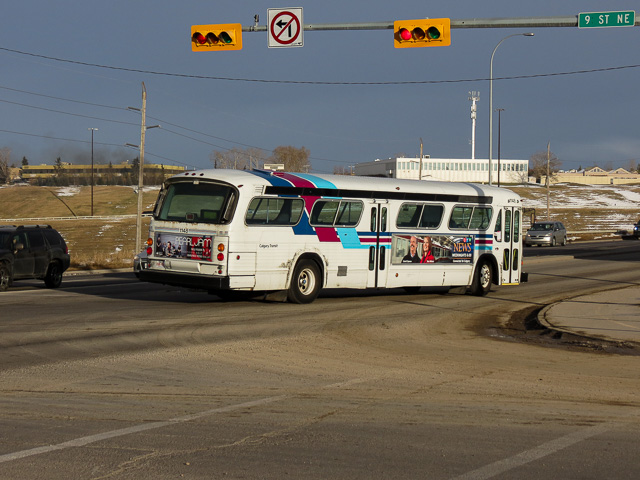
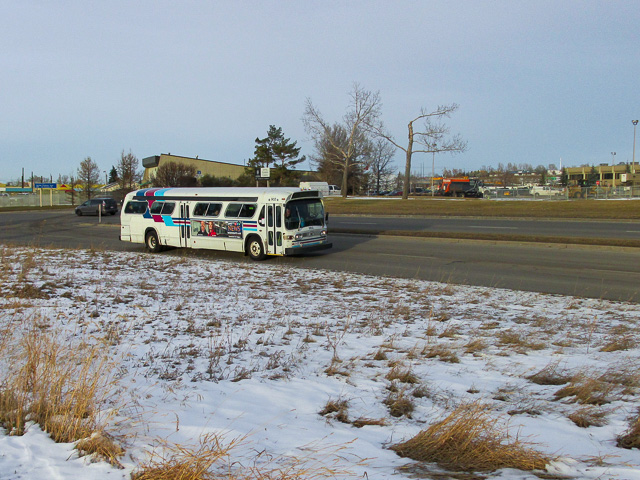
A BIGDoer.com repost from 2013. How many cities still have GMC Fishbowl buses in active service? Calgary Transit does! Most systems retired these venerable workhorses a while back and outside of odd stragglers in odd places, they’re nearly extinct. Except here it seems…
The buses we’re documenting represent the very last of what was once a huge fleet of hundreds that Calgary Transit once owned. These ones date from 1978 to 1982, and came from the last orders the agency placed for the model. CTS once had other Fishbowls going all the way back to 1962, but they already retired these earlier.
With the youngest Fishbowls presently over thirty years old, they are some of he oldest transit buses in service anywhere. Interestingly they’ve outlived some other models that came later and that’s a testament to their solid design.
Calgary Transit: the Last GMC Fishbowls – just before they were retired. With bus nuts Chris Doering & Connie Biggart (BIGDoer/Synd)
Thanks to “Anonymous” for sponsoring this and many other posts at BIGDoer.com. Be an angel…
This is a post from over a decade ago and we brought it back for your enjoyment. Ours too and that’s because we like buses – crazy as it sounds. The context reflects this earlier time, so keep that in mind, but we added some new tidbits too. Otherwise the post is pretty much the same as the original and if anything demonstrates how long we’ve been at it.
Scroll down for photos and to comment.
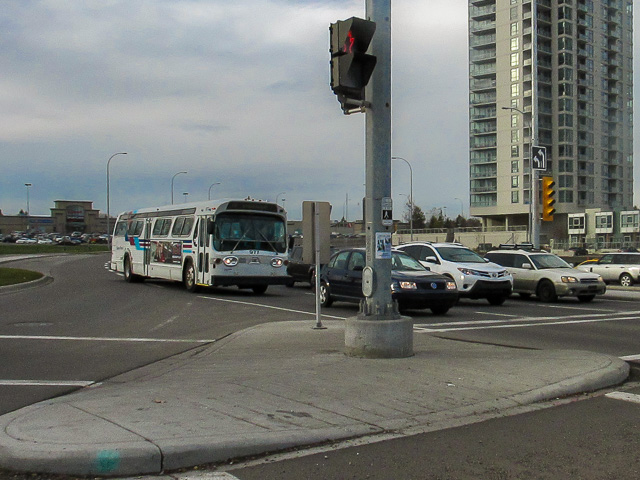
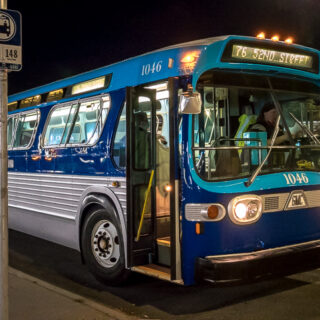
Officially called “New Look” by maker GMC, they soon gained the Fishbowl nickname. This came about due to the multi-angle and multi-part expansive windshield that gave the effect of being in a fishbowl. The front was almost all glass and at certain angles, the view distorted a bit.
US production began in 1959 and Canadian followed in 1961. Up until 1980 or so (some sources say 1982) the huge General Motors Diesel Division locomotive plant in London Ontario produced the buses here. That factory is history now and stopped making locomotives in 2012.
Later, a purpose built factory in Saint Eustache Quebec continued to make Fishbowls into 1986 for various customers across North America. For the last few years most of these buses went to the US. This plant also made the Fishbowl successor too (the Classic), and for a period it happened concurrently.
US transit systems liked the Fishbowl design so much that they continued to purchase Canadian made models long after US production ended in 1977. Their replacement in the US, the RTS, was not well received by some transit agencies, so they went shopping for the old proven design up north.
The two GM factories produced about forty four thousand Fishbowls, in numerous variations and about a quarter of the output came from the Canadian side. Nearly every transit system in North America had at least some on their roster and in many cites they were the dominate bus. Fishbowls came in various lengths (35 & 40 feet mostly), widths, seating arrangements and with many drive train combinations. But they all looked similar.
Given the longevity of the design it’s clear they hit the mark. Not fancy, they were most certainly tough, reliable, easily serviced and clearly able to handle nearly anything thrown at them.
Only a scant few years ago they were fairly common across North America and in many fleets were only recently retired. Say in the last five to ten years (remember, it’s 2013 talking). Many Fishbowls ended up lasting longer than the buses that were to replace them!
The “New Look” or “Fishbowl” also came in a suburban highway model. Edmonton Alberta, until recently, had some trolleybus versions and these were the only electrically powered ones built.
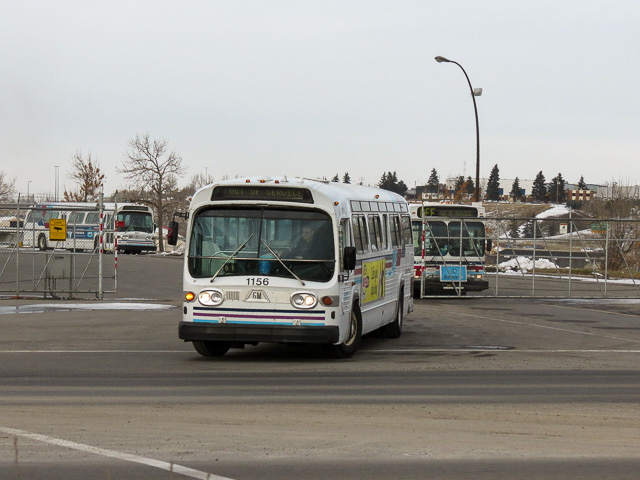
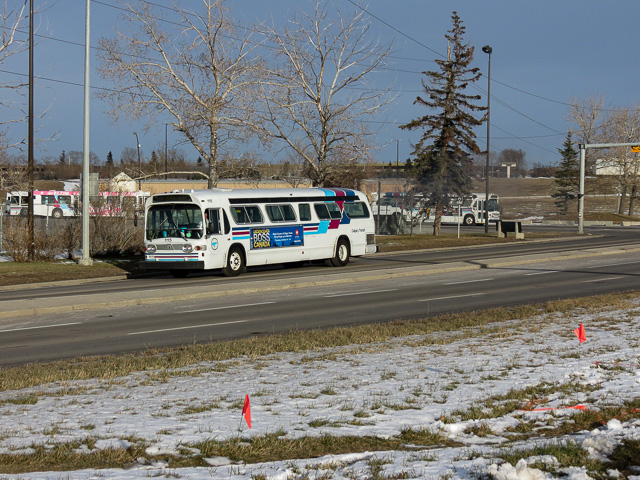
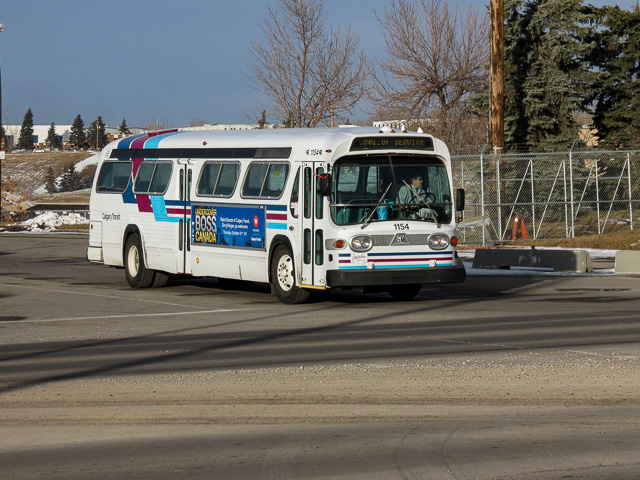
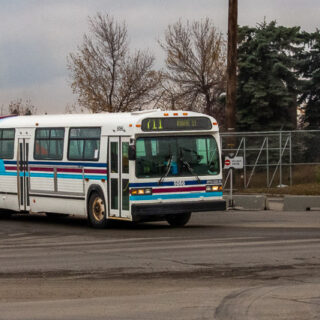
It’s not clear how many Calgary Transit Fishbowls remain, but data suggests it’s perhaps a few dozen at most. The day of our visit, we saw eleven head out for service and one parked in the back lot. Given their advanced age fleet usage varies considerably and some days they might not head out at all. Mostly, they only come out during the morning and afternoon rush.
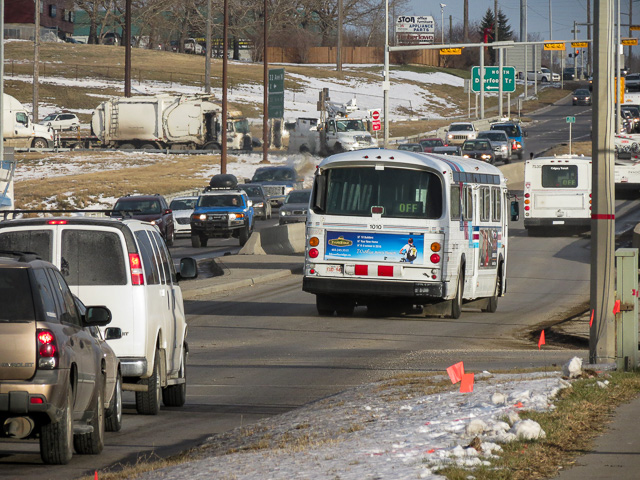
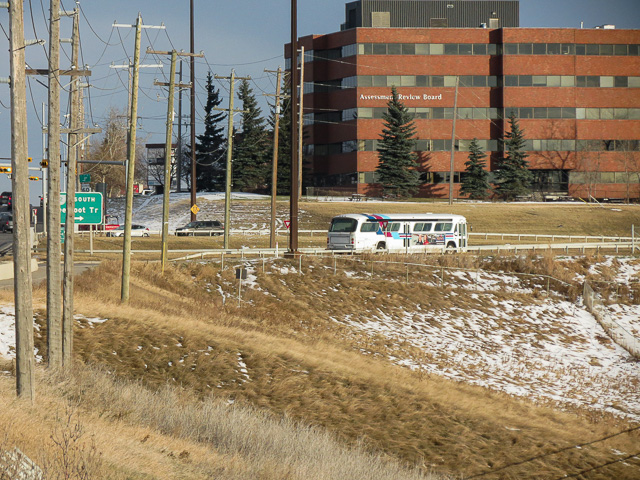
Many Fishbowls this day headed directly toward always dreadfully busy Deerfoot Trail and this demonstrates how much faith Calgary Transit has in these old buses. You don’t want to take an unreliable vehicle on that crazy stretch of road. Mad Max has entered the chat…
According to a few reports found, CTS plans to keep serviceable Fishbowls on the road for a little while longer and maybe into early 2014. We thought they were already done for and when visiting the barns over the last five or six months, saw many languishing in the back lot, presumably out of service. Never count them out and they were only in temporary retirement…we guess.
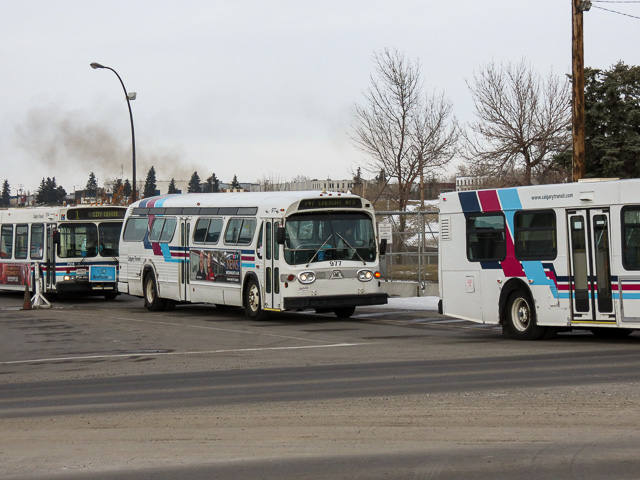
It was a chance spotting of #977 out in the wild a couple weeks prior that inspired this article and we last recall seeing some back in the spring. One can assume any bus developing a serious mechanical issue faces retirement ahead of any schedules.
On to the bus barns – we staked out a spot across the street just before the afternoon rush. In the span of half an hour, early in, we saw all the Fishbowls we’d see. In spite of hanging around much longer, no more would emerge from the barns. It was a short GMC parade, although an endless stream of other buses continued to leave afterwards.
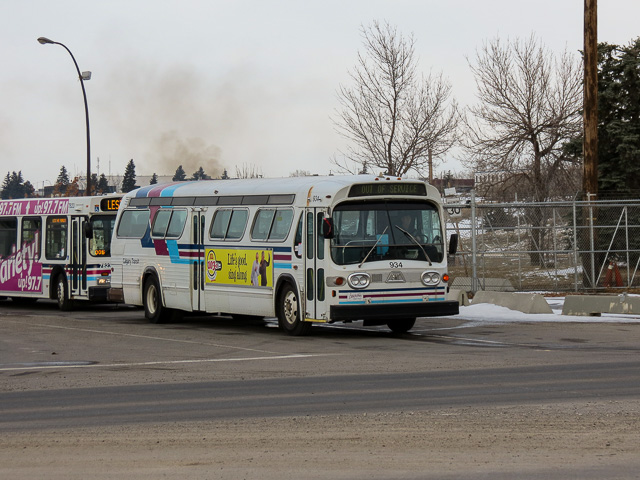
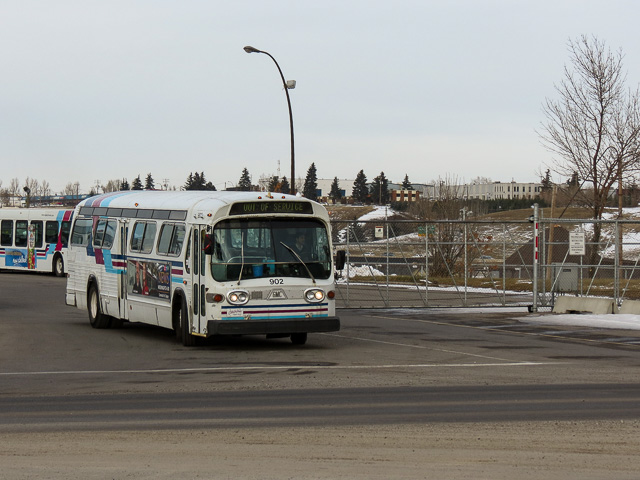
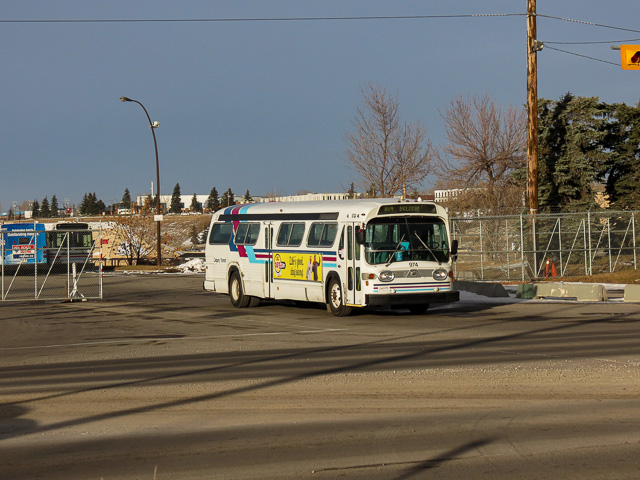
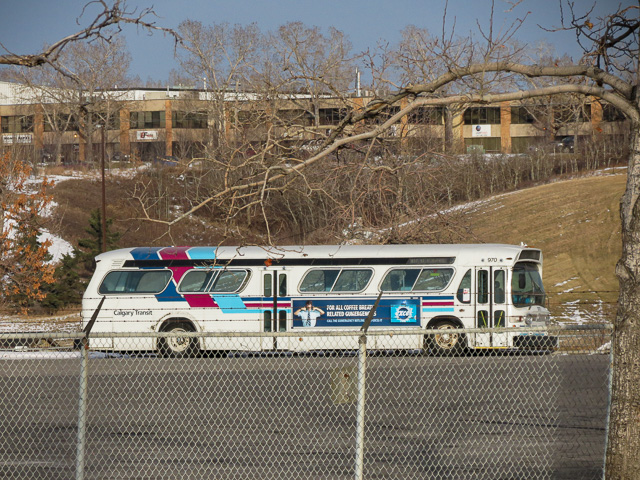
Of the thirteen Fishbowls seen (in numerical order), #902, #934, #970 (not in service), #974 and #977 (the one that inspired this article) were all from an eighty bus order built in 1978. These originally had the traditional roller sign as built but were later retrofitted with the programmable electronic versions seen today.
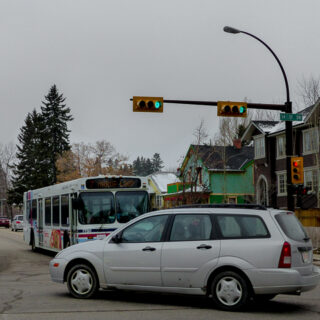
On our way home later, we saw #902 hard at work and loaded with passengers.
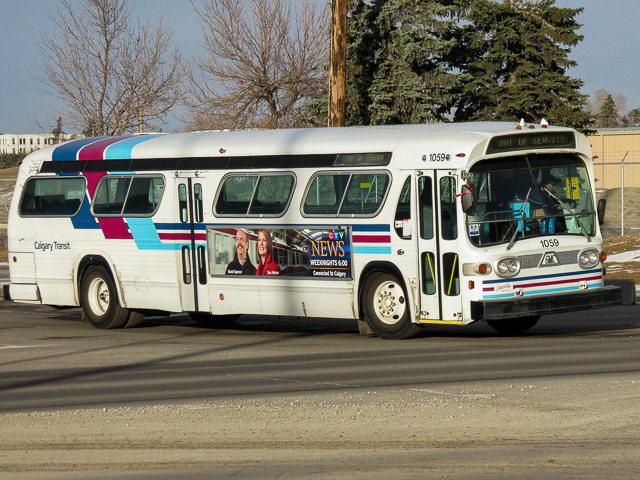
The following two, #1010 and #1115, were from 1979 order comprising thirty six buses. These were the first Calgary GMCs that came from the factory with electronic destination signs. Calgary Transit ordered seventy five Fishbowls in 1980 and #1059 is from that order.
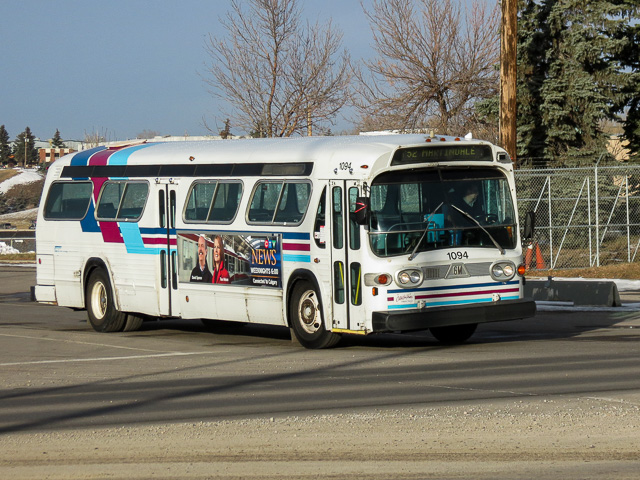
CTS made their final Fishbowl order in 1982 and #1094, #1148, #1154 and #1156 are from that group. These would be the final GMC produced buses of any model that Calgary Transit would purchase. GMC Canada sold the business later in the ’80s.
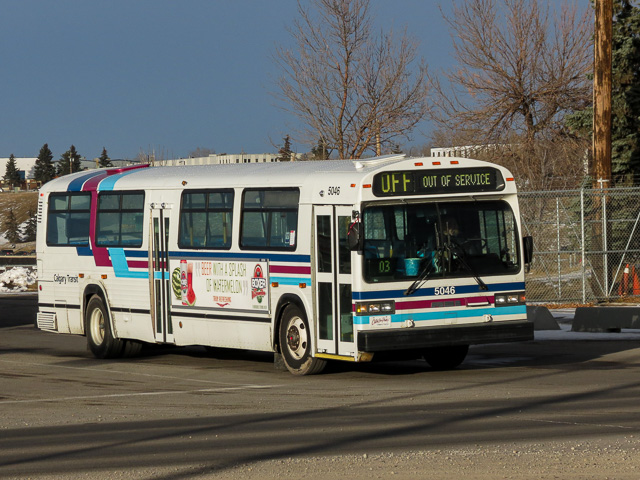
Most buses leaving had an out of service sign which presumably they’d change once on the assigned route. Some buses had 700-800 series route shown and these are school runs, plus one marked #52 Martindale.
Both of us here are pretty sure we’ve ridden some of these exact buses as some point. If you’ve taken Calgary Transit in the last few decades, chances are you have too.
Also seen in this post is an “MCI Classic”. Classic’s were first produced by GMC (1983-1987), then Motor Coach Industries took over (MCI – of Greyhound fame – 1987-1993) and finally came Nova Bus (1993-1997). All came from the same Quebec factory originally built by GM. Nova Bus would change over to to newer designs after production of the Classic model ended.
Designed by GMC to replace the Fishbowl, the Classic ended up being produced concurrently with the earlier model for time. Calgary Transit never purchased GMC or Nova Classics, but did acquire some from MCI. These date from the early 1990s and represents their next oldest fleet of buses after the Fishbowls.
Numbering over a hundred, CTS rebuilt many Classics in recent memory and for the time being their future seems assured for a year or two more. These buses, along with the Fishbowls, and a few older New Flyer models are the only non-low floor buses on the roster. High floor buses are not as flexible usage wise, but they’re good enough as pinch hitters. Look for a follow up repost here, where were captured some of the last Classic buses in service.
While the Classic model looks different from the Fishbowl, it shares a lot in common with the older design. Think of it as a re-skinned and slightly updated new “New Look”.
Fishbowls in 2013 are based out of the Spring Garden bus barn off 32nd NE and it’s a huge complex. It was the biggest facility the transit system and is home to hundreds of buses of all makes and types (Update: it’s since been surpassed). They do everything here from minor maintenance to major overhauls. Given how long they have been in the fleet, the mechanics must know these Fishbowls inside and out.
Before the Fishbowl bus era in Calgary ends, we hoped to catch a ride on one as a final hurrah. A good-bye to an old friend…if everything went well. As it happened, however, it was not to be and soon after documenting the action this day, CTS retired the lot of them. Permanently and not temporarily as before. That’s ahead of schedule by a month or two. It hinged on the delivery of new replacement buses, which were arriving at a pace quicker than expected.
These photos were captured on basic snapshot cameras and not the best quality as a result.
Something to say and no one to say it to? Go here: Contact Us!
Date of adventure: October and November 2013. Location: Calgary Alberta, Calgary Transit Spring Garden Facility. Article references and thanks: Calgary Transit and the Canadian Public Transit Discussion Board & Wiki.
_________________________
Offbeat Adventures – Lost & Forgotten Places – A Slice of History – Connections & Comparisons – The Beer Parlour Project🍺
Comments are (OFF)